


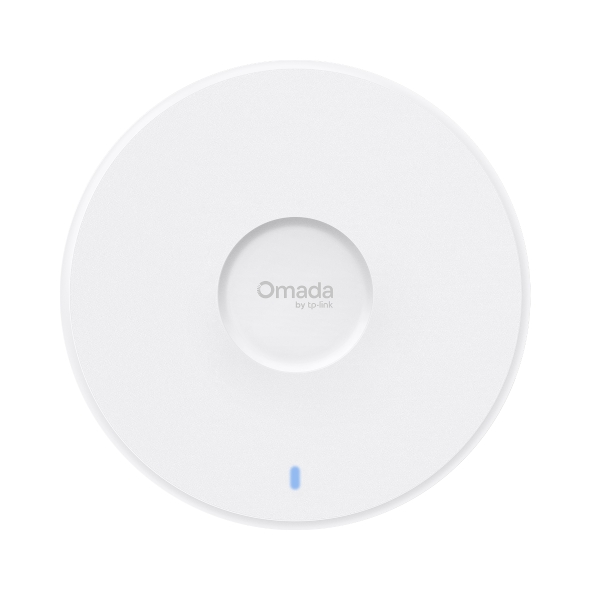
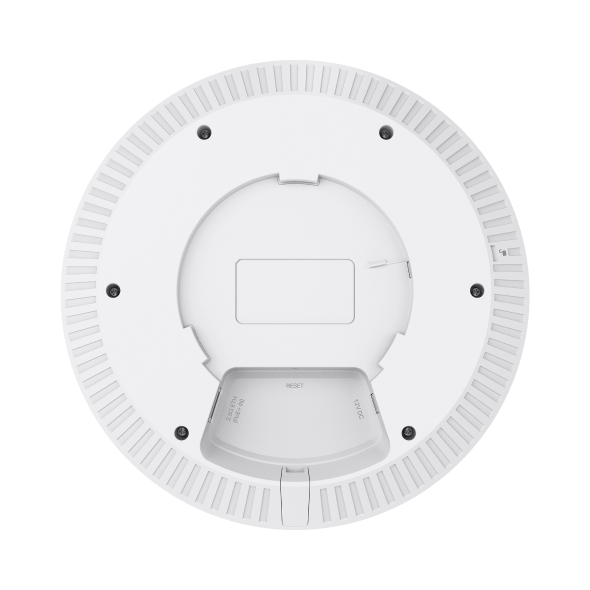
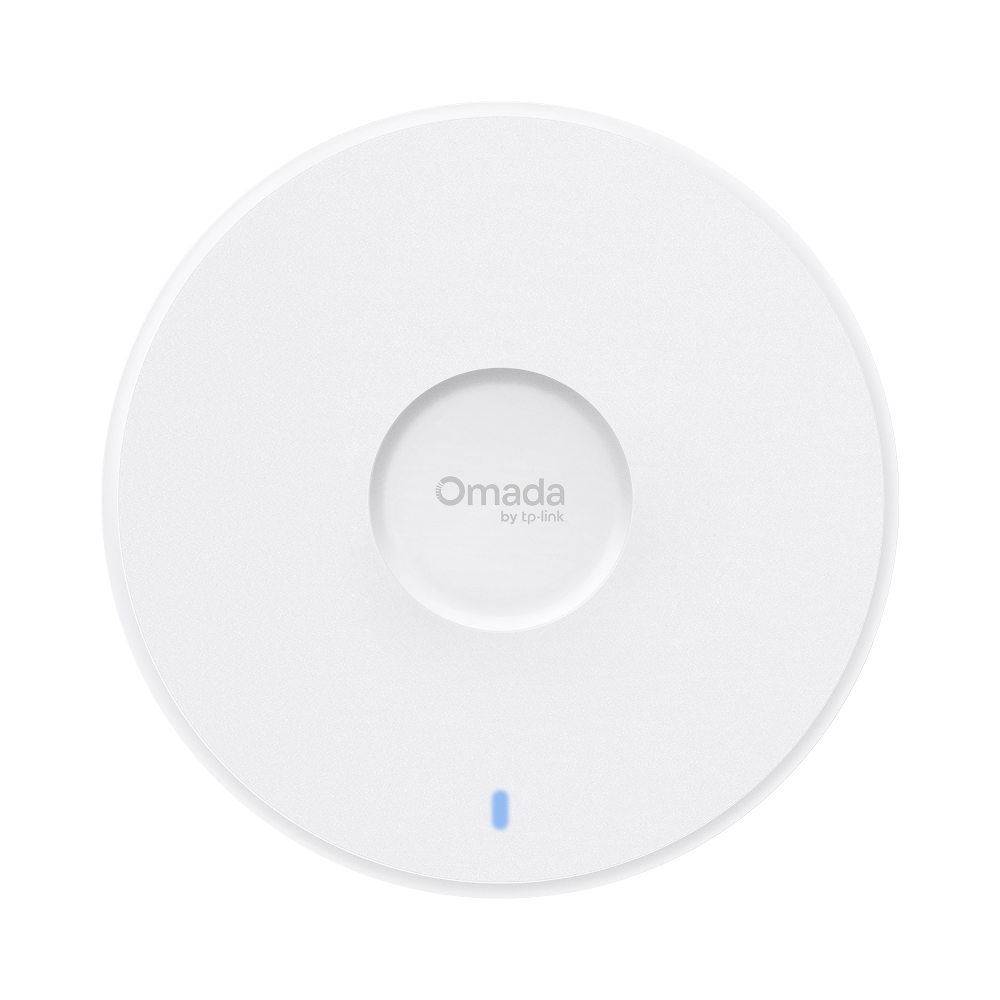
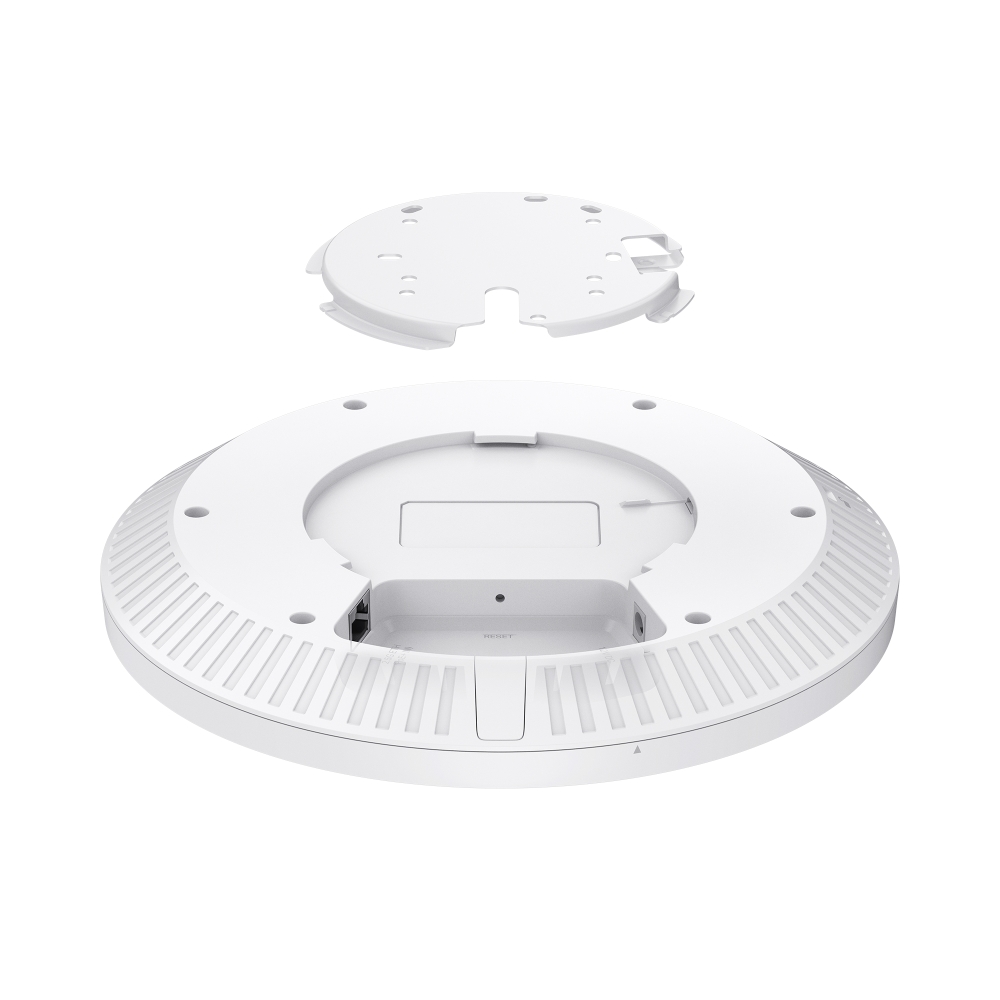
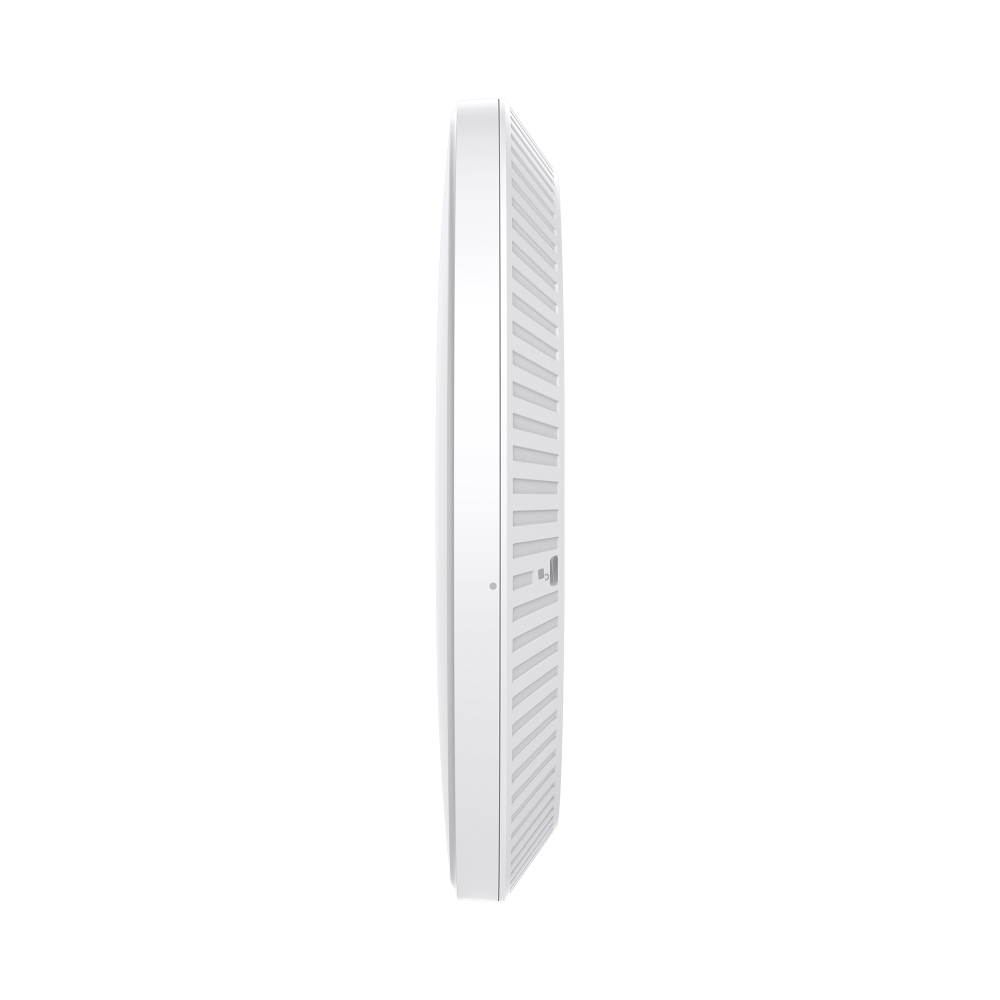
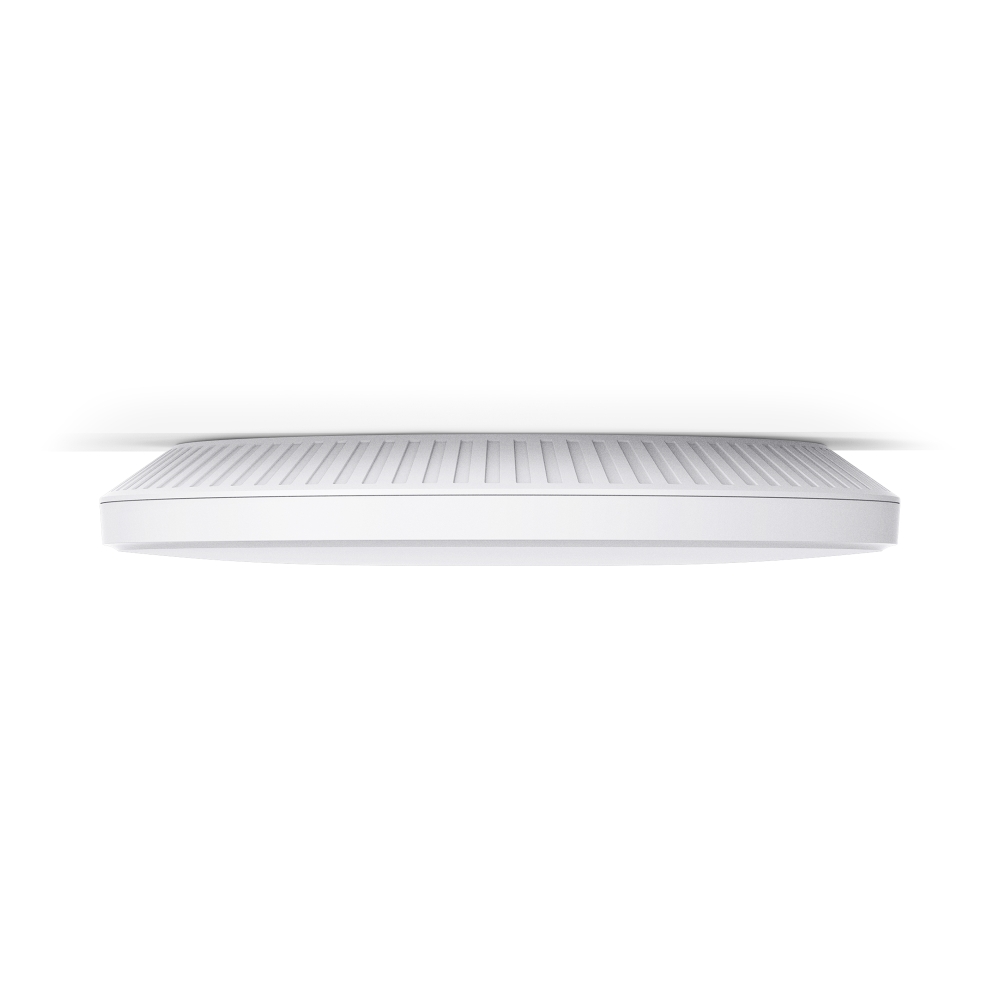
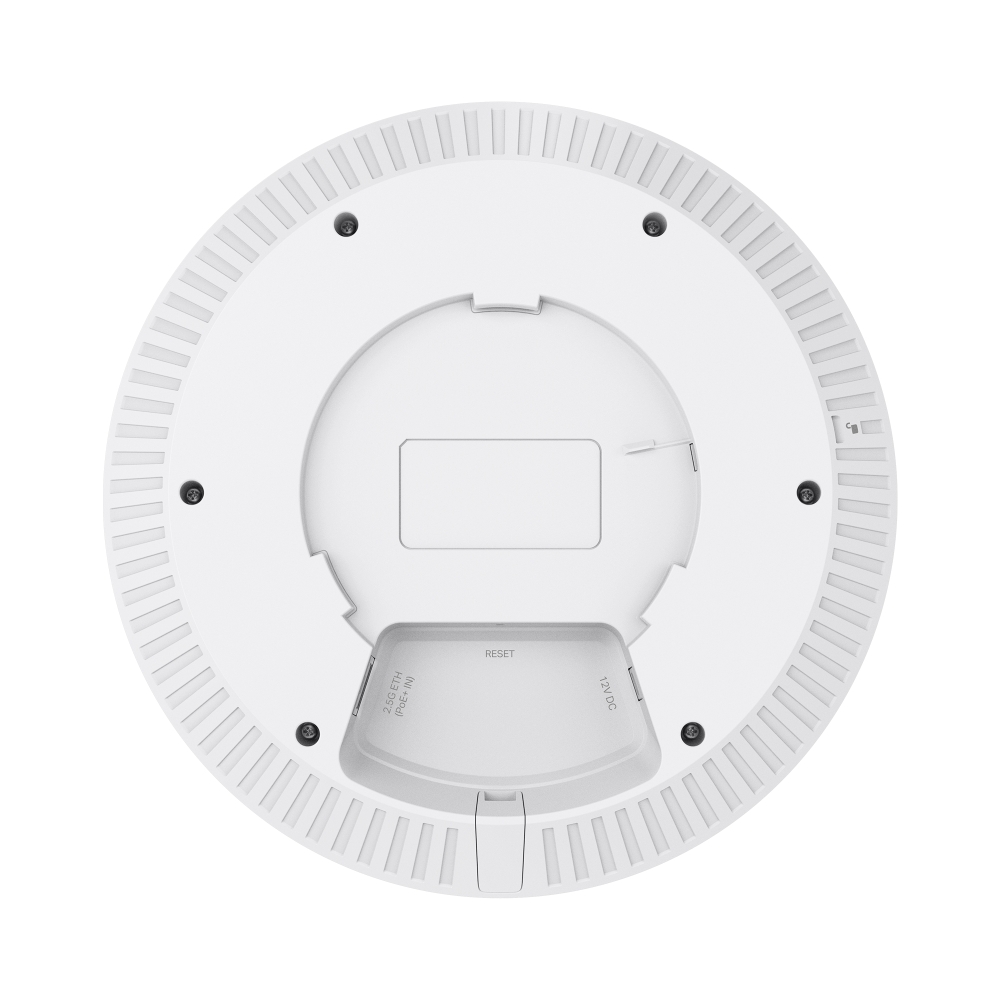
BE9300 Ceiling Mount Tri-Band Wi-Fi 7 Access Point
- BE9300 Tri-Band Wi-Fi 7: 5765 Mbps (6 GHz) + 2882 Mbps (5 GHz) + 688 Mbps (2.4 GHz). †
- Long-Range 6 GHz Coverage with AFC: Unlock stronger signals and wider 6 GHz coverage through AFC.#
- 1× 2.5G Port: Ensures fast connectivity throughout the network.
- Clear 6 GHz Band: Brings cleaner and wider band resources to your Wi-Fi.
- Low Latency and Interference: 320MHz Bandwidth, Multi-Link Operation, Multi-Rus, and 4K -QAM ensure high performance of your network.‡
- Flexible Deployment and Easy Setup: Supports both 802.3at PoE and DC Power supply for flexible installation. Omada SDN for one-click setup.
- Advanced Functions:Supports centralized management, Mesh, and Seamless Roaming.△
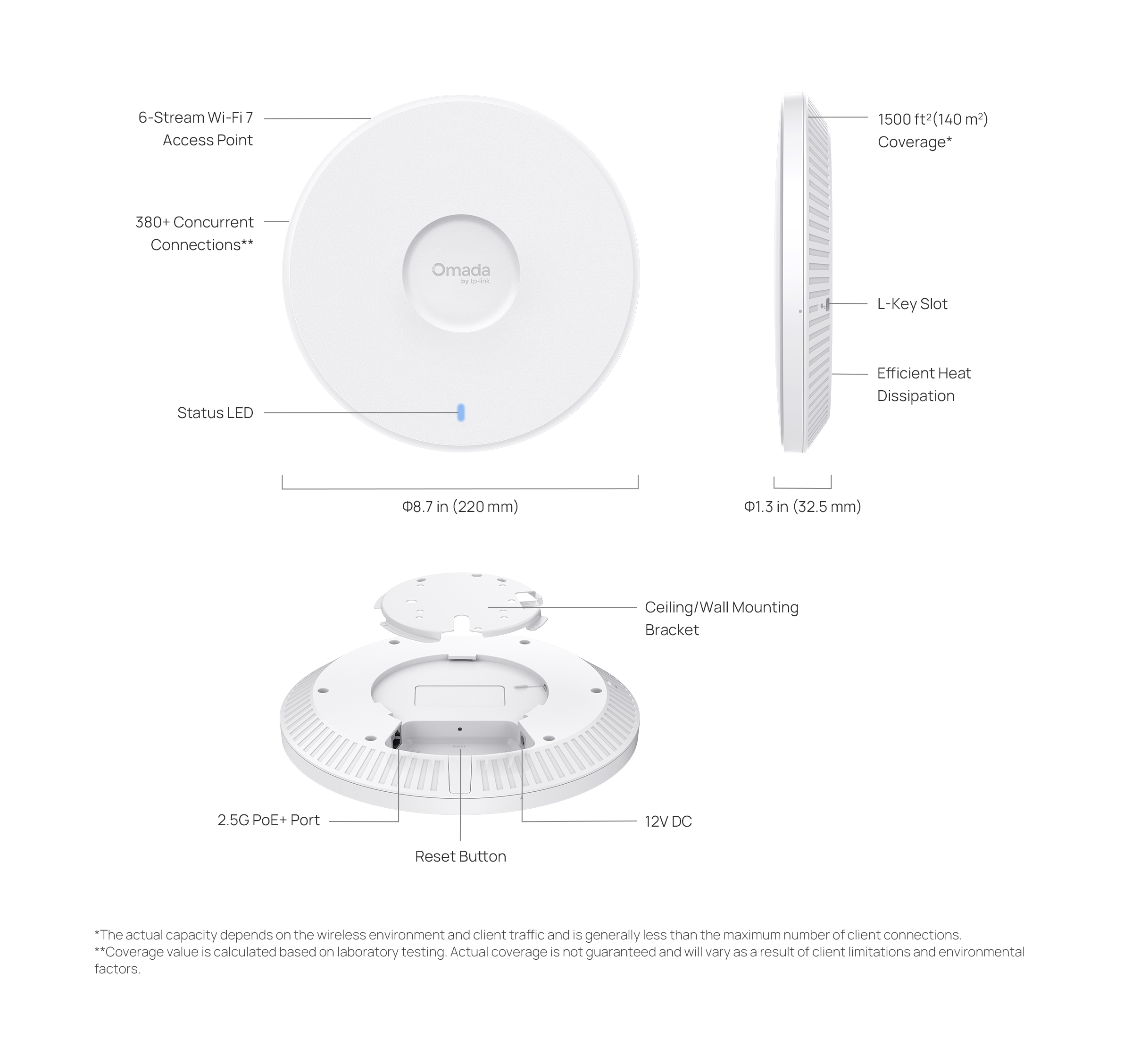
- More Capacity and Wider Coverage: Supports 380+ concurrent clients* and covers up to 1500 ft² (140 m2)** for reliable and extensive wireless connectivity

Omada BE9300 Ceiling Mount Wi-Fi 7 Access Point with 2.5G PoE+
EAP772

6-Stream
Wi-Fi 7

Wi-Fi Speeds
up to 9.3 Gbps†

1× 2.5 GbE Port

802.3at PoE

Omada Mesh &
Seamless Roaming▵

Centralized
Cloud Management

Enhanced
Security

Easy
Installation
Wi-Fi 7: Swifter,
Smoother, Stronger
Wi-Fi 7 Supersized Throughput
6 GHz
5765 Mbps
5 GHz
2882 Mbps
2.4 GHz
688 Mbps
4096-QAM for Higher Capacity

Wi-Fi 7 12 bits/symbol

Wi-Fi 6 10 bits/symbol
⬆20% more data transmission
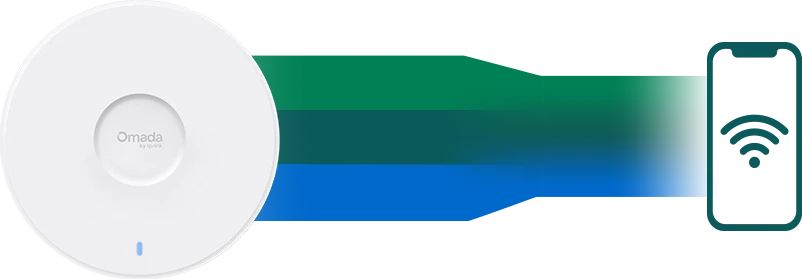
MLO for Lower Latency
6 GHz
5 GHz
2.4 GHz
Optimized Wired Performance with 2.5G PoE+ Port
With a 2.5 Gigabit Ethernet Port, EAP772 delivers remarkable multi-gigabit performance for higher bandwidth and faster Wi-Fi. Compatibility with 802.3at PoE is ideal for flexible deployment.
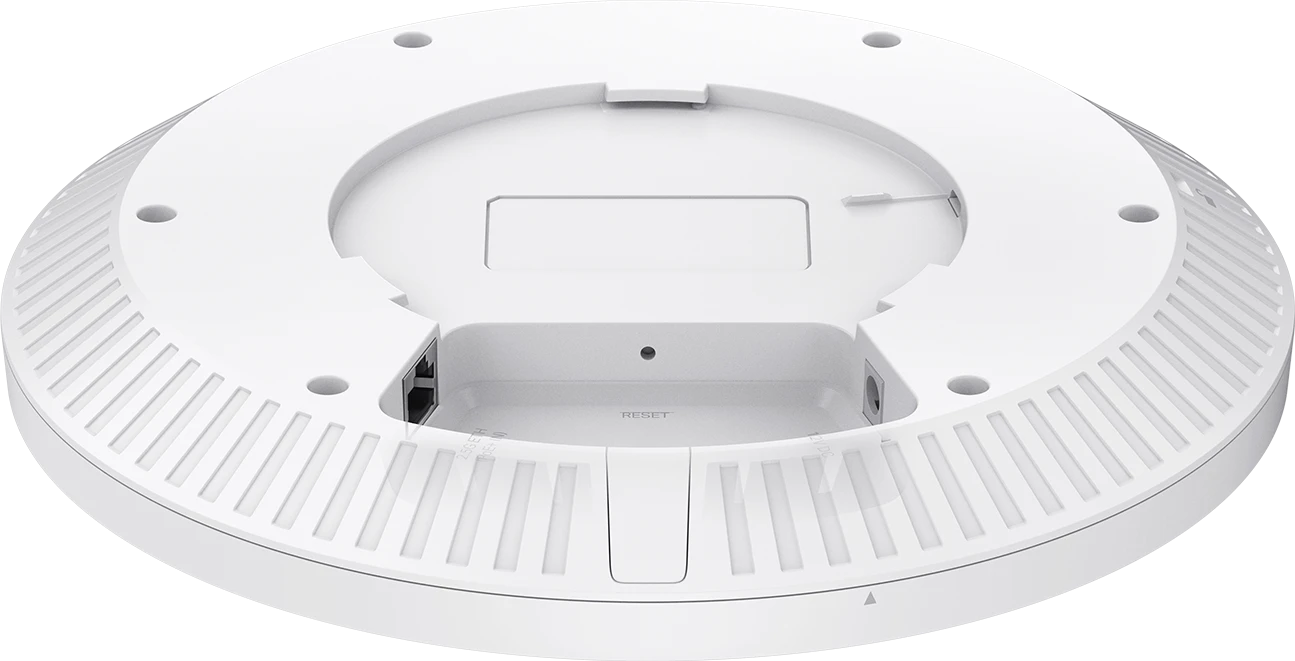
2.5G PoE+
Boosted Network Security

Secure Guest Network with up to 24 SSIDs

Boost Your Business with SMS Login
WPA3 for Worry-Free Open Public Networks

Rogue AP
Detection
Empowering Businesses
with Reliable Omada SDN Solutions
Omada’s Software-Defined Networking (SDN) solution seamlessly integrates access points (APs), managed switches, and gateways, enabling 100% centralized cloud management for a highly scalable network.

Omada Ceiling Mount Wi-Fi 7 AP
EAP772
Omada
Wall Plate
Wi-Fi 7 AP
Omada
Outdoor
Wi-Fi 7 AP
Omada
PoE Switch
Omada
VPN Gateway
Internet
Cloud
Access
On-Premises
Controllers
Hardware
Or
Software
Or
Omada Central
(Cloud-Based)
Web
Browser
Omada
App
| HARDWARE FEATURES | |
|---|---|
| Interface | 1× 2.5G Ethernet Port |
| Button | Reset |
| Power Supply | • 802.3at PoE• 12V/2A DCNote: DC Power adapter is not included. DC power interface: 12V, accepts 2.1 mm / 5.5 mm center-positive circular plug with 9 mm length. |
| Max. Power Consumption | • 23.39 W (For PoE)• 21.05 W (For DC) |
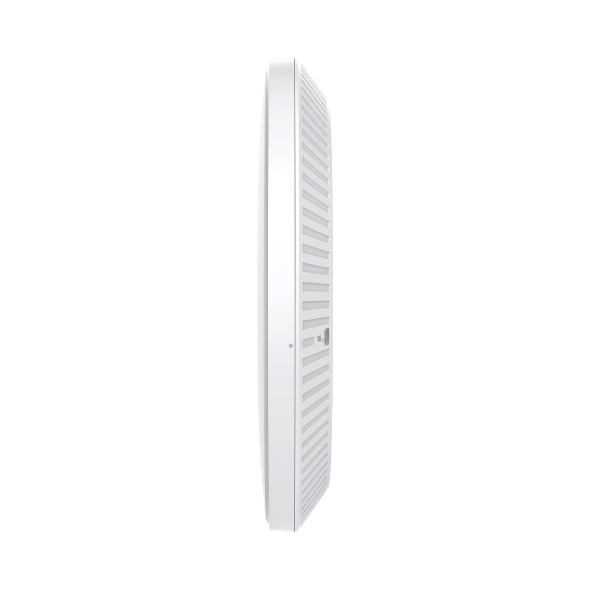
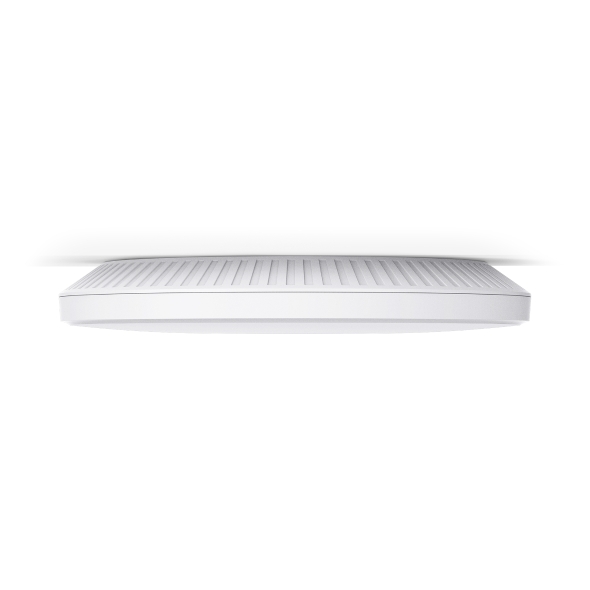
| Dimensions ( W x D x H ) | 8.7 × 8.7 × 1.3 in (220 × 220 × 32.5 mm) |
| Antenna | • 2.4 GHz: 2× 4.79 dBi• 5 GHz: 2× 6.98 dBi • 6 GHz: 2× 7.37 dBi |
| Bluetooth | 1 × 5.0 dBi |
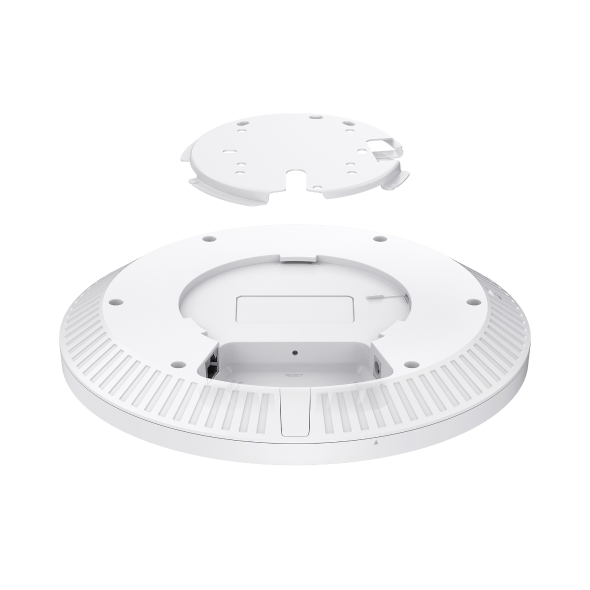
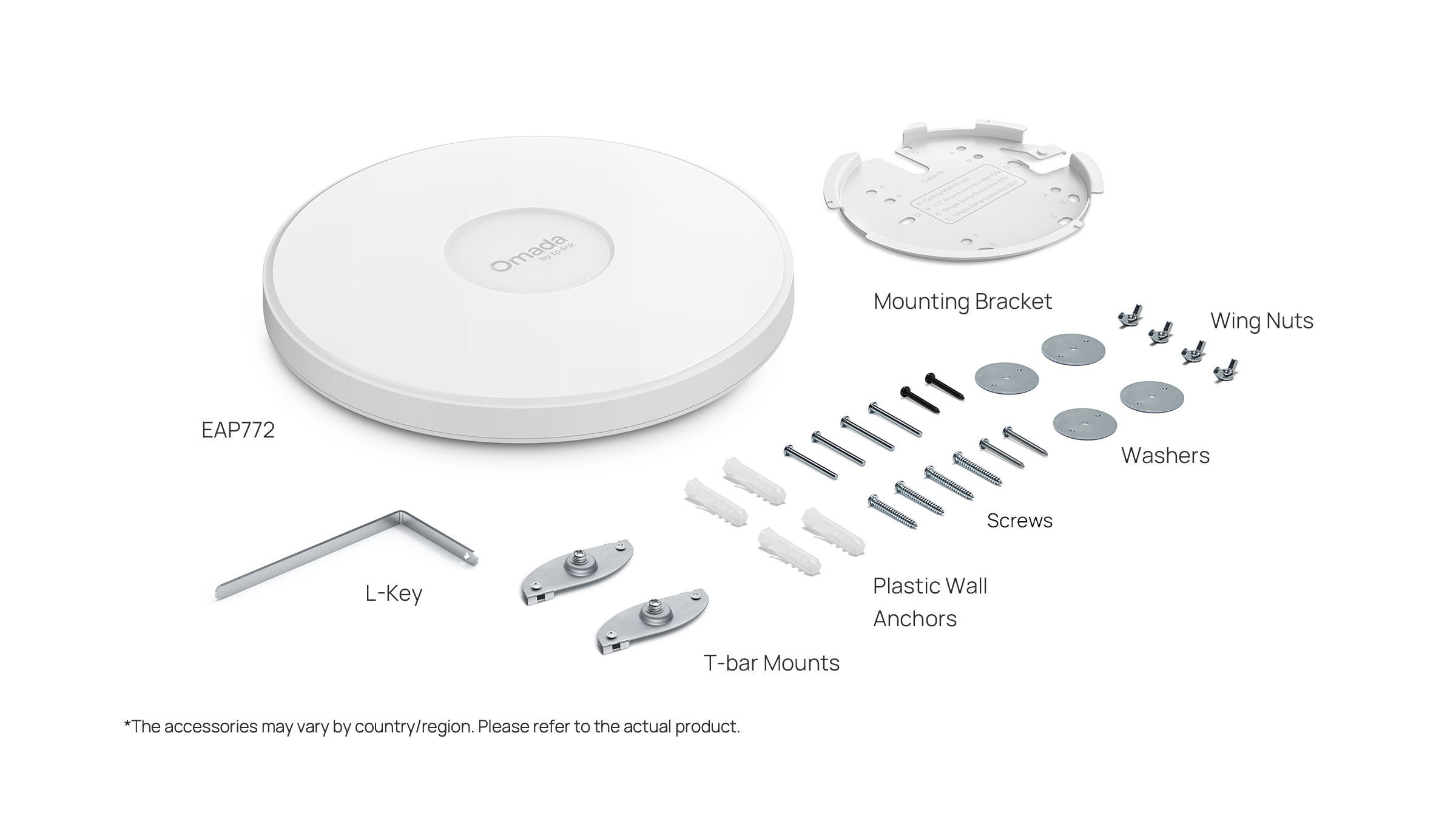
| Mounting | Ceiling / Wall /Junction Box Mounting (Kits Included) |
| Management Features | |
|---|---|
| Omada App | Yes |
| Centralized Management | • Omada Central (Cloud-Based)• Omada Hardware Controller• Omada Software Controller |
| Cloud Access | Yes. Require the use of an Omada controller. |
| Email Alerts | Yes |
| LED ON/OFF Control | Yes |
| Management MAC Access Control | Yes |
| SNMP | v1, v2c, v3 |
| System Logging Local/Remote Syslog | Yes |
| Web-based Management | Yes |
| WIRELESS FEATURES | |
|---|---|
| Coverage | 1500 ft² (140㎡)§ |
| Concurrent Clients | 380+** |
| Wireless Standards | IEEE 802.11 a/b/g/n/ac/ax/be |
| Frequency | 2.4 GHz, 5 GHz, and 6 GHz |
| Signal Rate | 688 Mbps (2.4 GHz) + 2882 Mbps (5 GHz) + 5765 Mbps (6 GHz)† |
| Wireless Functions | • MLO‡• 4K-QAM‡• MU-MIMO‡• 320 MHz Bandwidth‡• Mesh△• Seamless Roaming(802.11k/v/r)△• BBS Coloring‡• OFDMA‡• Load Balance• Band Steering• Beamforming• Airtime Fairness• Multiple SSIDS:24(8 on each band)• Wireless Schedule• Reboot Schedule• QoS(WMM)• Rate Limit• Static IP/Dynamic IP• RADIUS Accounting• MAC Authentication |
| Wireless Security | • Captive Portal Authentication△• Access Control• Maximum number of MAC Filter: 4,000• Wireless Isolation Between Clients• VLAN• Rogue AP Detection• WPA-Personal/Enterprise, WPA2-Personal/Enterprise, WPA3-Personal/Enterprise |
| Transmission Power | 7 - 20 dBm (2.4 GHz, EIRP)7 - 23 dBm (5 GHz, U-NII-1 & U-NII-2A, EIRP)7 - 28 dBm (5 GHz, U-NII-2C, EIRP)7 - 23dBm (6 GHz, EIRP) |
| OTHERS | |
|---|---|
| Certification | • Wi-Fi Alliance: Wi-Fi 7 (R1), Wi-Fi 6 (R2), Wi-Fi 6E, WPA3-R3, WPA3-Suite B, Enhanced Open Security• FCC/CE/NCC/VCCI/JRF/BSMI/WFA |
| Package Content | • Omada Ceiling Mount Accsee Point EAP772• Installation Guide• Ceiling/Wall/Junction Box Mounting Kits |
| Environment | • Operating Temperature: -30 °C–45 °C (-22 °F–113 °F);• Storage Temperature: -40 °C–70 °C (-40 °F–158 °F);• Operating Humidity: 10%–95% non-condensing;• Storage Humidity: 5%–95% non-condensing; |
†Maximum wireless signal rates are the physical rates derived from IEEE Standard 802.11 specifications. The 320 MHz bandwidth is only available on the 6 GHz band. Simultaneously, the 320 MHz bandwidth on the 6 GHz band and 160 MHz bandwidth on the 5 GHz band may be unavailable in some regions/countries due to regulatory restrictions. Actual wireless data throughput, wireless coverage, and connected devices are not guaranteed and will vary as a result of internet service provider factors, network conditions, client limitations, and environmental factors, including building materials, obstacles, volume and density of traffic, and client location.
# AFC availability varies by region and country. For supported areas, please visit: https://www.omadanetworks.com/support/faq/4373
‡Use of Wi-Fi 7 (802.11be), Wi-Fi 6 (802.11ax), and features including Multi-Link Operation (MLO), 320 MHz Bandwidth, 6 GHz, 4K-QAM, Multi-RUs, OFDMA, and MU-MIMO requires clients to also support the corresponding features.
△Omada Mesh, Seamless Roaming, Captive Portal, and Cloud Access require the use of an Omada controller.
* Coverage value is calculated based on laboratory testing. Actual coverage is not guaranteed and will vary as a result of client limitations and environmental factors.
* The actual capacity depends on the wireless environment and client traffic and is generally less than the maximum number of client connections.