How Do CCTV Cameras Protect Your Home Against Intruders?
Published: August 11, 2026 | Last Updated: August 11, 2026
Quick Answer
- The most thorough review of the evidence, covering 76 studies across 40 years, found crime fell about 13% in camera areas compared with control areas. Real, and modest.
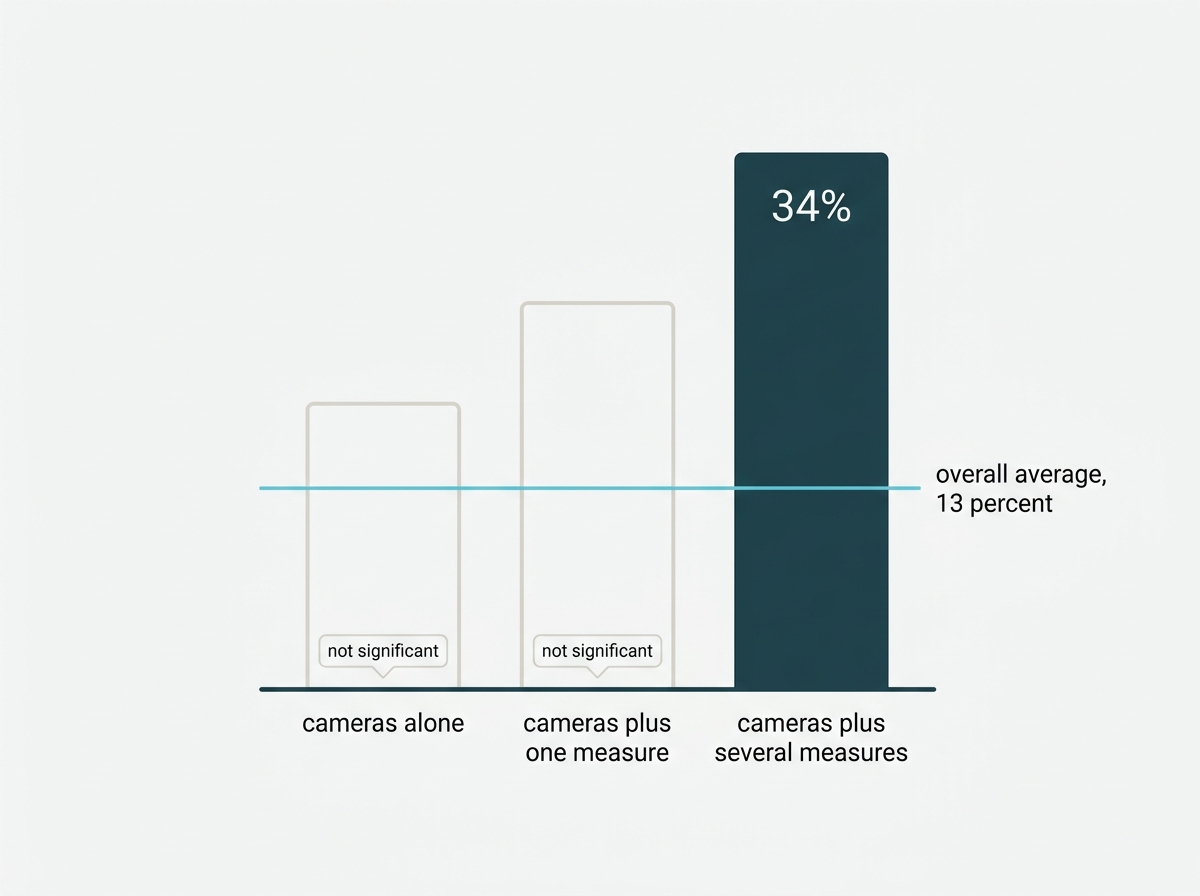
- Cameras deployed with multiple other measures, such as lighting, signage, and access control, were associated with about a 34% reduction. Cameras deployed alone did not reach statistical significance.
- The research measured area-wide schemes, not household cameras, and none of the studies took place in the Philippines. The direction is useful; the numbers do not transfer to a single house.
A camera does not physically stop anyone. What it changes is the calculation someone makes before trying, by raising the chance of being seen, recorded, and identified. That effect is real, and it has been measured, but it is smaller than security marketing suggests, and the research points somewhere most people do not expect: in the studies, cameras installed on their own did not produce a statistically significant crime reduction. Cameras installed alongside other measures produced the largest effect in the entire body of evidence.
Table of Contents
How Does a Camera Actually Protect a Home?
What Does the Research Actually Show?
Does That Research Apply to a Camera on a House?
What Made the Biggest Difference in the Studies?
Which Crimes Do Cameras Affect, and Which Do They Not?
Do Cameras Just Move the Problem Next Door?
What Does This Mean for Setting Up a Home System?
How Does a Camera Actually Protect a Home?
By changing what someone weighing up a property expects to happen, not by blocking anything. The protection is a shift in perceived risk, and understanding that is what tells you where a camera helps and where it does not.
Researchers classify CCTV as situational crime prevention, an approach built on the idea that offending is a decision responsive to opportunity and risk rather than something unstoppable. On that account, a camera works by raising the perceived chance of being seen and identified, which is the same reason lighting and gates work. It is a signal, and signals only work on people who read them and are willing to change course.
That framing sets a realistic expectation. A camera is persuasive before anything begins and useless as a barrier once someone has decided to proceed anyway, at which point its role changes to recording what happened and, if the system is set up for it, alerting someone while it is still happening.
What it means for you: treat a camera as one input into someone's decision rather than as protection in itself. The question worth asking about any camera position is what it makes visible to a person standing outside deciding whether to approach.
What Does the Research Actually Show?
A real effect, and a modest one. The most thorough assessment available is a 40-year review of CCTV research published in 2019 in Criminology & Public Policy, which pooled 76 studies and compared crime in camera-covered areas against comparable areas without cameras.
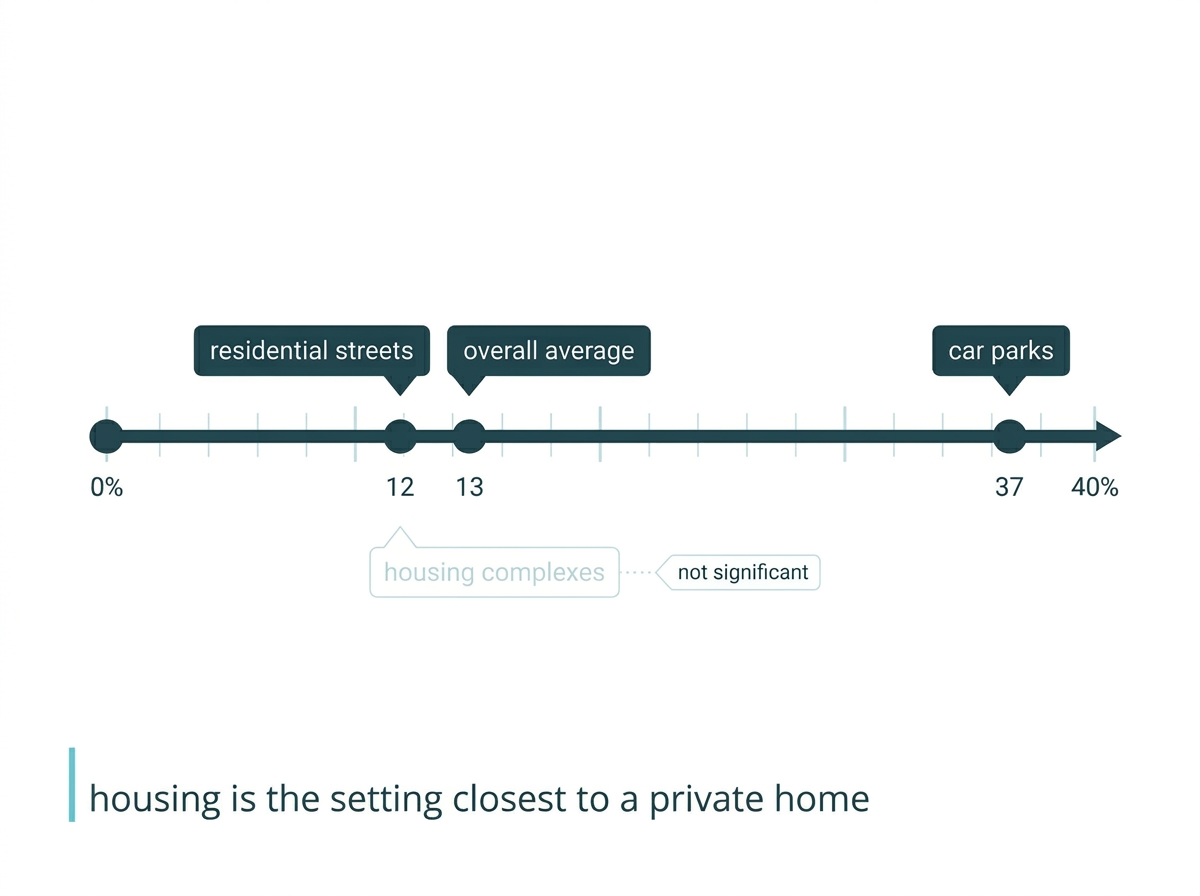
Across all of them, crime fell by approximately 13% where cameras were installed, relative to the control areas. That is statistically significant, and it is far below the figures that circulate in advertising. The authors describe the effect as modest, and their own summary is more careful than most of the material that quotes it.
The effect varied a great deal by setting. Car parks showed the largest and most consistent reduction at roughly 37%. Residential areas showed roughly 12%. City and town centers, housing complexes, and public transport did not show statistically significant reductions in the main analysis.
Two limitations are associated with those numbers. The studies span nine countries, with the United Kingdom and the United States contributing most of them, and none of them was conducted in the Philippines. Effects differed significantly by country, with significant reductions in the United Kingdom and South Korea and no significant effect in the United States, Canada, or Sweden. So the figures describe what happened in those places under those conditions, not what will happen at a given address here.
 What it means for you: use these numbers to set expectations rather than to justify a purchase. A camera moves the odds. It does not decide the outcome, and anyone quoting a dramatic percentage at you is quoting something other than this research.
Does That Research Apply to a Camera on a House?
Only partly, and this is the part most articles quoting the 13% figure get wrong, including in ways that flatter the product.
The review separates its settings carefully, and two of its categories sound alike while meaning different things. Residential schemes are cameras covering public areas such as streets in residential neighborhoods, which is to say municipal or area-wide systems. Housing schemes are cameras covering the grounds of a complex, such as courtyards and the areas in front of building entrances, which is much closer to a camera on private property.
Residential schemes showed a significant reduction of about 12%. Housing schemes showed no statistically significant effect.
So the encouraging residential finding is a finding about street cameras, and the category closest to a private installation is the one where the evidence did not show a significant reduction. That does not mean a camera at your gate does nothing. It means this body of research does not demonstrate that it does, because almost nobody has run a controlled study of household cameras in the way these schemes were studied.
What does transfer is the direction of the findings rather than the numbers: monitored beats unmonitored, combined beats alone, and property crime responds more than violence does. Those hold across settings, and they are the parts of this research a homeowner can actually use.
What it means for you: be skeptical of any home security page quoting a crime reduction percentage at you, including the ones quoting this study. The honest position is that cameras help most as part of a wider setup, which is what the next section is about.
What Made the Biggest Difference in the Studies?
Not the cameras on their own. The single largest effect in the whole analysis came from schemes that deployed cameras alongside other measures, and the authors state plainly that their evidence argues against using CCTV as a stand-alone tactic.
The numbers are stark. Schemes using multiple interventions alongside cameras were associated with roughly a 34% reduction in crime. Schemes using cameras with one other intervention, and schemes using cameras alone, did not reach statistical significance. The other measures coded in the studies were signage, improved lighting, police or security patrols, security guards, access control such as gates and entry systems, community outreach, and communication systems for calling for help.
Monitoring mattered too. Schemes where somebody was actively watching and able to respond showed a significant reduction, while passively monitored schemes, which record and are reviewed later if at all, showed no significant effect. In those studies, active monitoring meant staffed control rooms rather than a phone notification, so it is not the same thing as an app alert. The principle still applies at home: a system somebody responds to does something; a system that only stores footage does not.
Feature-to-Benefit: What the Studies Deployed, and the Household Equivalent
|
Measure in the research |
What it looks like at a house |
What it contributes |
|
Improved lighting |
Motion or dusk-to-dawn lighting at the gate, driveway, and back entrance |
Removes the dark approach and makes the camera's footage usable |
|
Signage |
A visible notice that cameras are recording, and the camera itself being visible |
Carries the deterrent signal to someone who has not entered yet |
|
Access control |
A closed gate, a working lock, a functioning latch on the side entrance |
The physical layer a camera cannot provide |
|
Active monitoring |
Alerts somebody actually reads, and a camera that responds by itself with light or sound |
Turns recording into a response while something is still happening |
|
Communication systems |
A way to call for help quickly, including two-way audio on the camera |
Shortens the time between noticing and responding |
Lighting makes an approach visible and makes footage usable; signage and a visible camera carry the warning to somebody still deciding, a gate and a lock provide the barrier a camera cannot, alerts that someone reads turn a recording into a response, and a fast way to call for help shortens the gap between noticing and acting. The research found these combinations outperformed cameras alone by a wide margin.
 What it means for you: if the budget stretches to cameras and nothing else, put some of it into lighting at the same points instead. On this evidence, the combination is worth more than a better camera on its own.
Which Crimes Do Cameras Affect, and Which Do They Not?
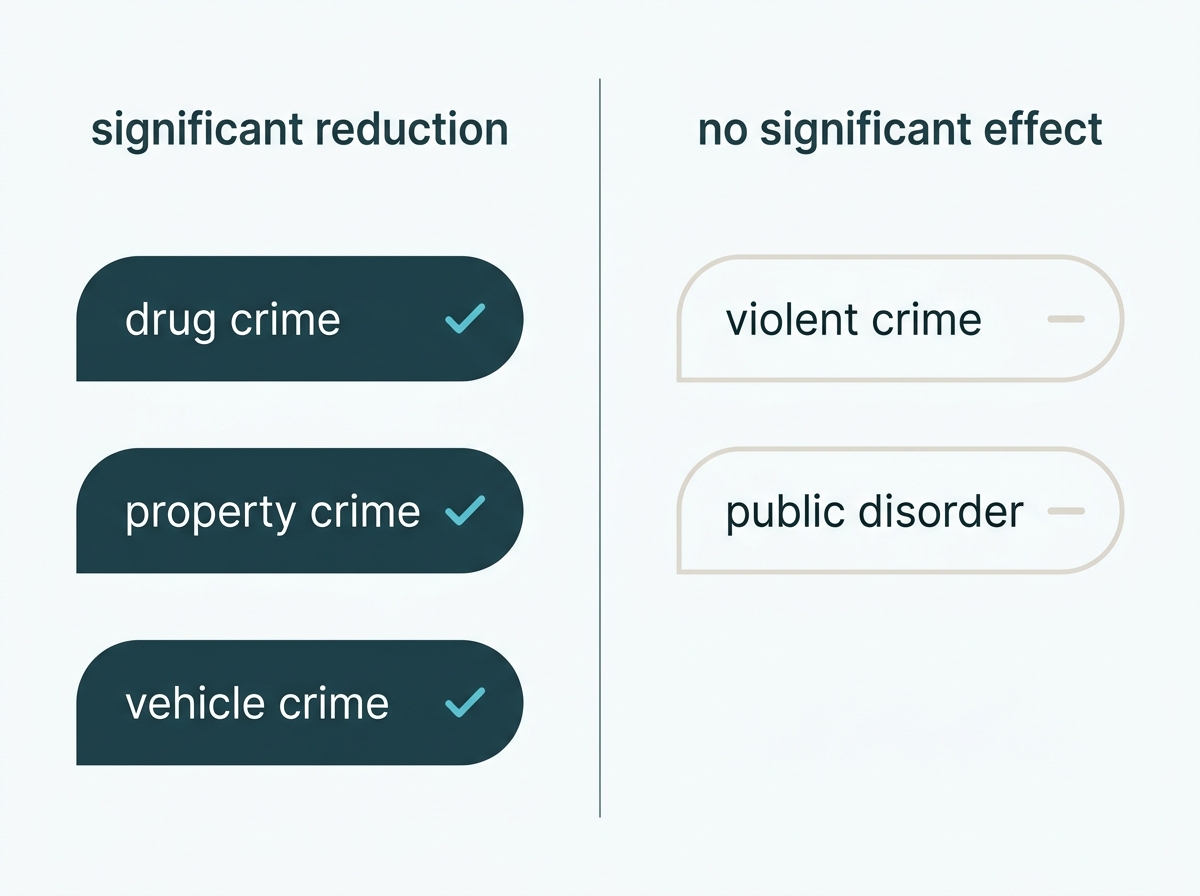
Property crime, vehicle crime, and drug crime, according to the review. Not violent crime, and not disorder.
The review found significant reductions of roughly 14% for both property crime and vehicle crime, and about 20% for drug crime, which was the largest effect by crime type. For violent crime and for public disorder, there was no statistically significant effect across the studies.
That pattern makes sense against the mechanism described earlier. A camera works on someone weighing risk against reward beforehand, which describes an opportunistic property offense far better than it describes a confrontation that escalates. It is also the honest limit of what a camera can be expected to do, and it is worth knowing before installing one in the expectation that it covers everything.
 What it means for you: cameras are a reasonable measure against the theft of things and a poor one against confrontation. If your concern is the second, cameras are not the tool the evidence supports.
Do Cameras Just Move the Problem Next Door?
Mostly not, and the research looked. This is the most common objection to any visible security measure, and it turns out to be the wrong worry.
Fifty of the studies tested for displacement, meaning crime shifting into nearby uncovered areas, and only six found evidence of it. Fifteen found the opposite, an effect researchers call diffusion of benefits, where crime also fell in adjacent areas that had no cameras at all. A few found signs of both.
Diffusion is worth understanding because it works in a household's favor for the same reason the deterrent does. Somebody who does not know exactly where the coverage ends behaves as though it extends further than it does.
What it means for you: you are not simply pushing a problem onto your neighbors, and on this evidence, a street where several houses have visible cameras and lighting is likely better off collectively than the sum of the individual installations.
What Does This Mean for Setting Up a Home System?
Cover the approaches, make the measures visible, and make sure somebody or something responds rather than just records. Those three follow directly from the findings above.
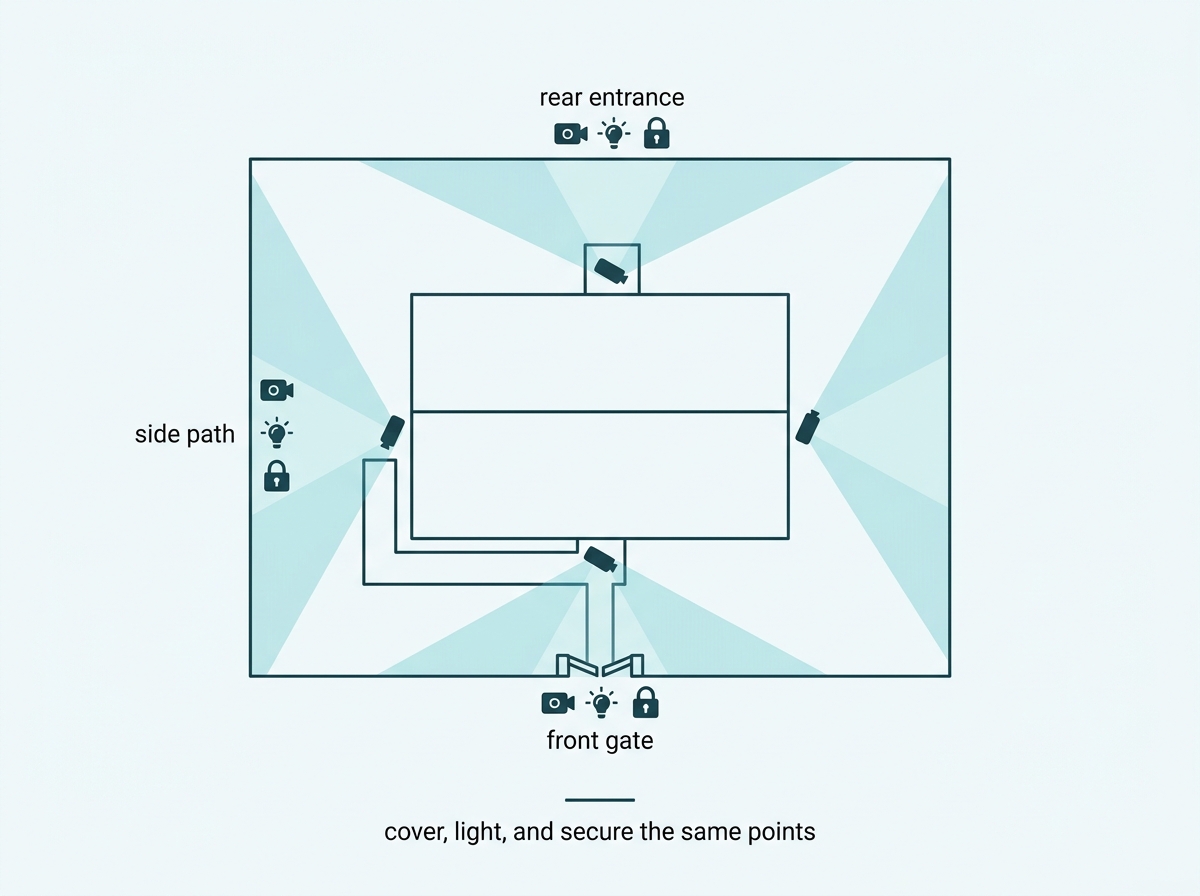
Cover the approaches, not just the front. The front gate is where a camera is most visible and does most of its deterrent work, but the entrances people actually use when they do not want to be seen are the side and rear ones. Both matter, for different reasons.
Keep it visible. Visible confirmation that cameras are present is a distinct measure in the research, coded separately from the cameras themselves. A camera nobody can see does its evidence job and none of its deterrent job.
Light the same points you cover. Lighting was one of the complementary measures in the higher-performing schemes, and it does double duty, because a dark approach also produces footage nobody can use.
Make sure the alert reaches someone. A camera that only records is the passive case, and passive schemes showed no significant effect. What helps at home is alerts that get read, which in practice means alerts that are not constant, since notifications people learn to ignore are not a response mechanism. Some cameras also respond by themselves at the moment of detection rather than only recording, which is the closest household equivalent to the staffed monitoring the studies measured. What those capabilities are and how they work is a subject of its own. The routes available for reaching a system from elsewhere, and what each of them costs you, are covered in Can I Access My Security Cameras Remotely?
One local point worth checking. If any of your cameras sees past your own property line, into the street or a neighbor's frontage, Philippine privacy rules treat you as responsible for that footage. Angling coverage inward where possible is worth doing at installation.
For choosing the cameras themselves, our guide to keeping a home safe with smart cameras covers the selection side, and you can browse VIGI cameras or explore VIGI's surveillance solutions for complete systems.
How those pieces fit together as one system, rather than as separate purchases, is covered in CCTV System Philippines Buyer's Guide.
What it means for you: plan the three approaches together and put a camera, a light, and a physical barrier at each. That is the arrangement the evidence supports, and it costs less than upgrading a single camera to a better one.
Frequently Asked Questions
Do security cameras actually reduce crime, or just record it?
Both, and less than most advertising suggests. A 2019 review of 76 studies spanning 40 years found crime fell about 13% in camera-covered areas compared with control areas, which the authors describe as a modest effect. The same review found that cameras deployed alongside other measures performed far better than cameras deployed alone.
Does that research apply to a camera on my own house?
Not directly. The studies measured area-wide schemes, and the category closest to a private property, cameras covering the grounds of a housing complex, showed no statistically significant effect, while the significant residential finding refers to cameras covering public streets. The direction of the findings is useful for a household even though the percentages do not transfer.
Are fake or dummy cameras an effective deterrent?
There is no good evidence that they are, and reason for doubt. In the research, real systems that recorded without anyone monitoring them showed no statistically significant reduction in crime, and a dummy camera offers less than that, with no footage and no alert if anything does happen. Visible signage alongside working cameras is a measure the research does record.
Where should cameras be placed for the best effect?
At the approaches, meaning the front gate plus the side and rear entrances, and visibly rather than hidden. Visible confirmation that cameras are operating was coded as a distinct measure in the studies, so a camera nobody can see does its evidence job and none of its deterrent job.
Does monitoring matter more than camera quality?
The evidence points that way. Schemes with active monitoring, where someone was watching and able to respond, showed significant crime reductions, while passively monitored schemes showed none. At home, the practical version is an alert somebody actually reads, and cameras that respond automatically with light or sound rather than only recording.
Do cameras just push crime to a neighbor's house?
Usually not. Of the studies that tested for it, only six found evidence of crime shifting to nearby areas, while fifteen found the reverse, with crime also falling in adjacent areas that had no cameras. Researchers call that second effect diffusion of benefits.
Can a camera stop a break-in that is already happening?
Not by itself, since a camera is not a barrier. What it can change is how quickly someone finds out and responds, which is why an alert that reaches a person, or a camera that reacts automatically at the moment of detection, does something that a system storing footage for later review does not.
Final Thoughts
The honest answer to how cameras protect a home is that they shift a decision rather than block an action, and the evidence for how much they shift it is more modest than the advertising around them. About 13% across four decades of studies, none of them conducted here, and no significant effect at all in the setting closest to a private property.
The finding worth acting on is a different one. In the same research, cameras installed alongside other measures were associated with roughly a 34% reduction, while cameras installed alone did not reach statistical significance at all. Lighting, a visible notice, a gate that closes, and an alert somebody reads are not accessories around a camera purchase. On this evidence, they are most of what makes the camera work.
So the useful next step is not choosing between camera models. It is walking your own property at night, noting each way in, and asking of each one whether it is covered, lit, and physically secured. If you want a hand turning that walk into a plan, bring it to a VIGI specialist: the approaches you found, which of them already have lighting, and which cameras would need to see past your own boundary to cover them. You will get back a layout that covers the ways in, a note on which positions need lighting before a camera is worth mounting, and a straight answer about which positions are better solved with a gate than with a camera. Or explore VIGI's surveillance solutions to see the cameras that fit the approaches you have mapped.