Philippine Guide: CCTV for Schools and the Classroom Rule
Published: August 13, 2026 | Last Updated: August 13, 2026
Quick Answer
-
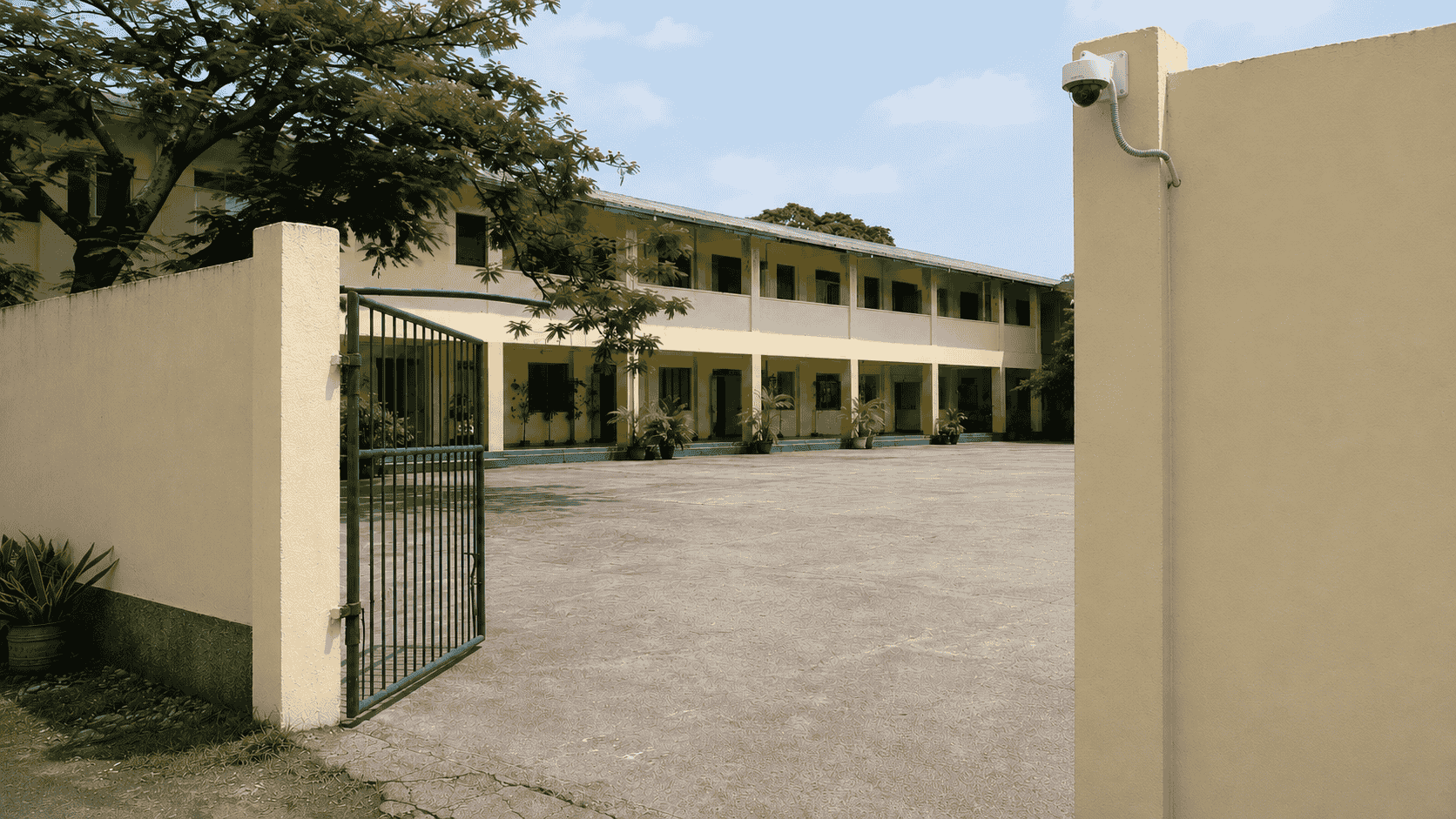
General campus areas, meaning gates, hallways, grounds, and common spaces, are broadly accepted, subject to NPC Circular 2024-02 and transparency with the school community.
-
Classroom cameras are a different decision. DepEd Memorandum No. 88, s. 2019 states that classrooms are not included in general CCTV allowances without specific approval, and NPC guidance requires documented evidence of a serious risk at that particular school.
-
Restrooms, changing rooms, and similar spaces are prohibited outright, and this is the rule most often broken by accident when covering staff areas.
Cameras at a school gate and cameras inside a classroom are not the same decision, and Philippine rules treat them very differently. General campus coverage sits under the same expectations as any other institution: comply with data privacy law, be transparent about it, and keep cameras out of private spaces. A camera pointed inside a classroom faces a much higher bar, requiring approval from a Schools Division Superintendent, a recommendation from the school's Child Protection Committee, parental consultation, and documented evidence of a specific risk at that school. Knowing which side of that line a proposed camera falls on is most of what a school needs to get right.
Table of Contents
What Rules Apply to School CCTV in the Philippines?
Where Does Campus Coverage Belong?
Why Are Classrooms Treated Differently?
What Does a Division-Level Policy Look Like?
How Long Should a School Keep Footage?
What Should a School Get Right Before Installing?
What Rules Apply to School CCTV in the Philippines?
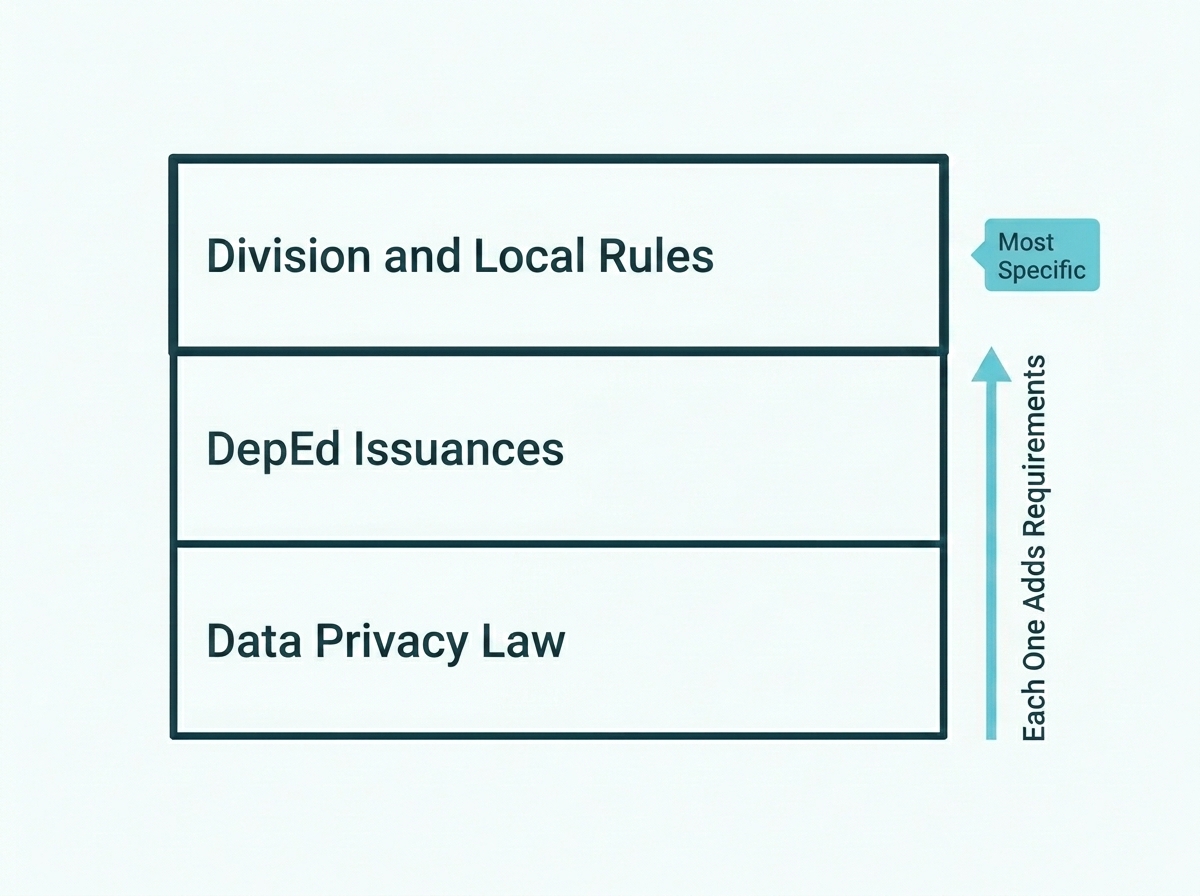
Three layers, and they stack rather than replace each other. A school has to satisfy all three, and most confusion comes from treating one as the whole answer.
Data privacy law. NPC Circular 2024-02 governs CCTV use generally and applies to a school like any other organization recording people. It requires visible notice, a declared purpose, coverage proportionate to that purpose, restricted and logged access, and a documented retention period. It also prohibits cameras in areas carrying a heightened expectation of privacy, naming rest rooms, toilets, fitting rooms, and lactation rooms.
DepEd issuances. DepEd Memorandum No. 88, s. 2019, on enhancing school safety and security measures, allows CCTV in school premises where necessary and sets the classroom exception covered below. A later unnumbered memorandum in August 2023 reminded public schools that classroom installation needs prior approval from the Regional Director and compliance with NPC guidance.
Local rules. Some local government units have passed ordinances requiring or funding school CCTV in their jurisdiction, and individual school division offices publish their own operating guidelines. These are more specific than national issuances, and they are what an individual school is actually held to.
School safety policy has been actively strengthened through 2026. DepEd Order No. 006, s. 2026, the Guidelines on Ensuring a Safe and Motivating Learning Environment, was issued in March 2026 to consolidate the department's learner protection issuances, and regional and division offices circulated reiteration memoranda through the middle of the year directing stricter observance of school safety and security measures. A school planning or upgrading a system should expect its division office to have current instructions, and should ask for them rather than working from national documents alone.
What it means for you: start with your school's division office, not with a supplier. The division's own guidelines are more specific than anything national, and they are the standard your installation will be measured against.
Where Does Campus Coverage Belong?
At the boundaries and the shared spaces, which is uncontroversial, and not in the places where privacy expectations are highest, which is absolute. The middle ground is smaller than most schools assume.
Feature-to-Benefit: Coverage by Campus Zone
|
Zone |
Standing |
The point |
|
Gates and main entrances |
Broadly accepted |
Supports visitor management, which is the measure schools are most often asked to strengthen |
|
Perimeter and grounds |
Broadly accepted |
Deters unauthorized entry, which is the risk a school can actually design against |
|
Hallways and covered walkways |
Broadly accepted |
Standard circulation coverage, same as any institution |
|
Canteen and assembly areas |
Broadly accepted |
Shared, high traffic, no heightened privacy expectation |
|
Staff rooms and offices |
Case by case |
Consult staff, and treat their privacy as seriously as learners' |
|
Classrooms |
Restricted, high bar |
Requires specific approval and documented justification |
|
Restrooms, changing rooms, showers |
Prohibited |
Named in NPC Circular 2024-02 and in division guidelines |
The perimeter and the circulation spaces are where coverage is expected and least contested, and they are also where a school's realistic risks sit, since access control is what a campus can actually manage. Staff areas deserve a conversation rather than an assumption. Classrooms are a separate decision entirely. And the prohibited list is not a matter of judgment.
The prohibited spaces are where well-intentioned installations go wrong, usually when someone covering a corridor positions a camera so a changing room doorway sits in frame. The fix is the same technique used in any corridor: mount at one end and shoot along the length, so doorways appear in profile rather than head-on.
What it means for you: map the campus into four categories rather than two: accepted, case by case, restricted, and prohibited. The fourth is the one to walk physically, because a doorway in frame is easy to miss on a plan.
Why Are Classrooms Treated Differently?
Because DepEd says so explicitly, and because the privacy regulator sets an additional condition on top. This is the single most important thing for a school to understand before a supplier quotes for classroom coverage.
DepEd Memorandum No. 88, s. 2019 allows CCTV in school premises where necessary, and states that classrooms are not included unless approved by the Schools Division Superintendent, on the recommendation of the school's Child Protection Committee, and following parental consultation. That is three separate requirements, and they are cumulative rather than alternatives.
A later unnumbered DepEd memorandum in August 2023 added that classroom installation requires prior approval from the Regional Director and compliance with NPC guidance.
NPC Advisory Opinion No. 2020-041 adds the substantive test: classroom CCTV is considered permissible only where there is documented evidence of a serious safety risk at that specific school. Not a general precaution applied uniformly, and not a preference. A documented risk at that school.
Two things follow. First, classroom cameras remain uncommon in Philippine public schools outside divisions that obtained approval after a documented incident, so a school proposing them is doing something unusual and should expect scrutiny. Second, private schools have more latitude, since they can address CCTV in enrollment agreements, but latitude is not an exemption, and the privacy obligations still apply.
There is also a professional dimension worth acknowledging rather than glossing over. Teachers' organizations have consistently opposed continuous classroom surveillance, and the concerns are about the working environment as much as about privacy. A proposal that has not been discussed with teaching staff is a proposal that will meet resistance regardless of its legal standing.
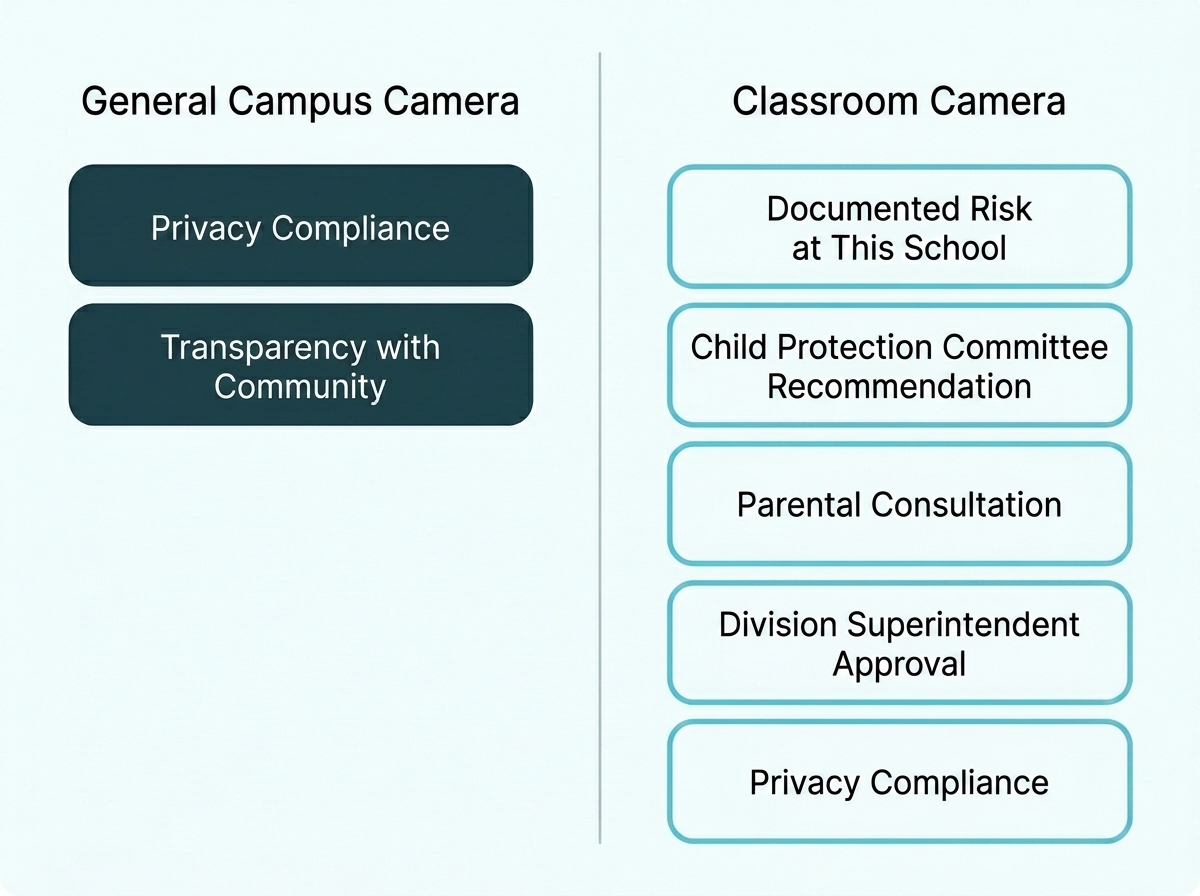
What it means for you: treat a classroom camera proposal as a separate project with its own approval path, not as an extension of the campus system. If any of the four conditions cannot be met, the answer is no rather than not yet.
What Does a Division-Level Policy Look Like?
More specific than the national issuances, it is the document your school will actually be held to. A published example makes this concrete.
The Schools Division Office of Muntinlupa issued Division Memorandum No. 113, s. 2023, setting out guidelines for CCTV use in schools within the division. Among its provisions, cameras are not permitted inside toilet areas, change rooms, dressing rooms, showers, and other areas carrying a privacy expectation. Requests to view footage may only be granted with the approval of the Schools Division Superintendent. The school head is responsible for identifying camera locations and their coverage, and for informing the installation team accordingly. The principal is responsible for ensuring the system is properly managed.
Three things are worth noticing in that. Camera positions are the school head's decision rather than the installer's. Viewing footage is a controlled act requiring authority above the school. And responsibility for the system is assigned to a named role rather than left to whoever set it up.
Not every division publishes guidelines this detailed, and yours may differ. But the shape is instructive, and if your division has issued something similar, it takes precedence over any general advice, including this article.
What it means for you: ask your division office for its CCTV guidelines before designing anything. If it has none, the Muntinlupa memorandum is a reasonable model for what a school-level policy should cover.
Do Parents Have to Consent?
Not necessarily in the strict legal sense for general campus areas, and yes in every practical sense. Treating the legal answer as the whole answer is how schools create problems for themselves.
Under the Data Privacy Act, processing can rest on legitimate interest rather than consent where the purpose justifies it, and campus safety generally qualifies for common areas. So a school is not usually required to obtain individual consent from every parent before installing a camera at the gate.
What is required is transparency. NPC Circular 2024-02 requires visible notice that a CCTV system is in operation and a declared purpose. Beyond the legal minimum, informing parents and the wider school community about what is covered, why, and who can access it is what prevents the system from becoming a source of conflict later.
Classroom cameras are the exception, and their consultation is explicitly part of the approval path rather than good practice layered on top.
What it means for you: communicate before you install, not after somebody asks. A short note to parents describing what is covered and why costs nothing and removes the most likely objection.
How Long Should a School Keep Footage?
Long enough to serve the purpose you declared, and no longer, with the period written down. The commonly cited figure of around 30 days is a starting point rather than a rule.
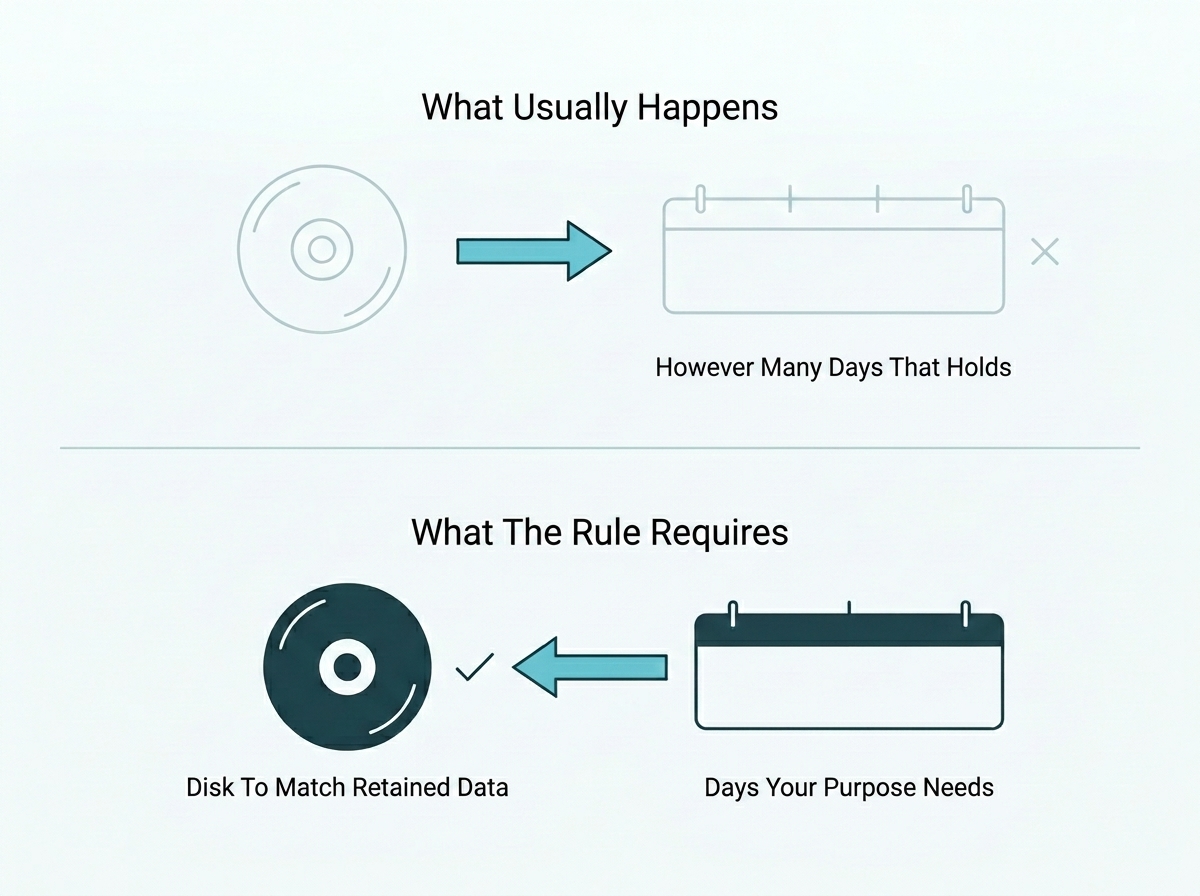
NPC Circular 2024-02 sets no fixed period. It requires that footage be kept only as long as the declared purpose needs, that the period be documented in a written policy, that footage be destroyed once it is no longer needed, and specifically that the retention period must not be determined solely by the storage capacity of the system.
That last provision is the one schools most often trip over, because the default behavior of a recorder is to keep going until the disk fills and then overwrite. That produces a retention period set by hardware, which is exactly what the Circular says it cannot be. The sequence should run the other way: decide the days, then size the storage to hold them.
Access matters as much as duration. The Circular requires access to recorded footage to be limited to authorized personnel and logs of viewing, copying, and transfers to be maintained. In a school, this is not a formality. Footage relating to a disciplinary matter or an incident involving a learner is sensitive material, and premature or informal release causes harm that access controls exist to prevent.
What it means for you: write a retention period and an access list before the system goes live, and configure the recorder to match rather than accepting its default. Both are ten-minute tasks at setup and difficult conversations afterwards.
What Should a School Get Right Before Installing?
Five things, and only one of them is about equipment.
Ask the division office first. Its guidelines are more specific than national issuances, and they are the standard you will be held to.
Map the campus into four categories. Accepted, case by case, restricted, prohibited. Walk the fourth physically rather than trusting a plan.
Decide the purpose and the retention period in writing. They determine the storage you buy, and they are the first two questions anyone will ask.
Name who can view footage and who approves a request. In the Muntinlupa model, that approval sits with the Schools Division Superintendent, and having it defined before an incident is far better than deciding during one.
Then choose equipment. Cameras that can mask parts of their view, recorders that log access, and enough storage for the retention period you decided on rather than the other way round. To compare cameras and recorders for a campus deployment, browse VIGI cameras and VIGI network video recorders, see how VIGI groups its offering under solutions by industry, or explore VIGI's surveillance solutions.
How this fits a wider institutional deployment is covered in Surveillance Solutions for Philippine Businesses, and the full set of privacy obligations, including which of them change what you buy, is in CCTV & Security Camera Buying Guide Philippines.
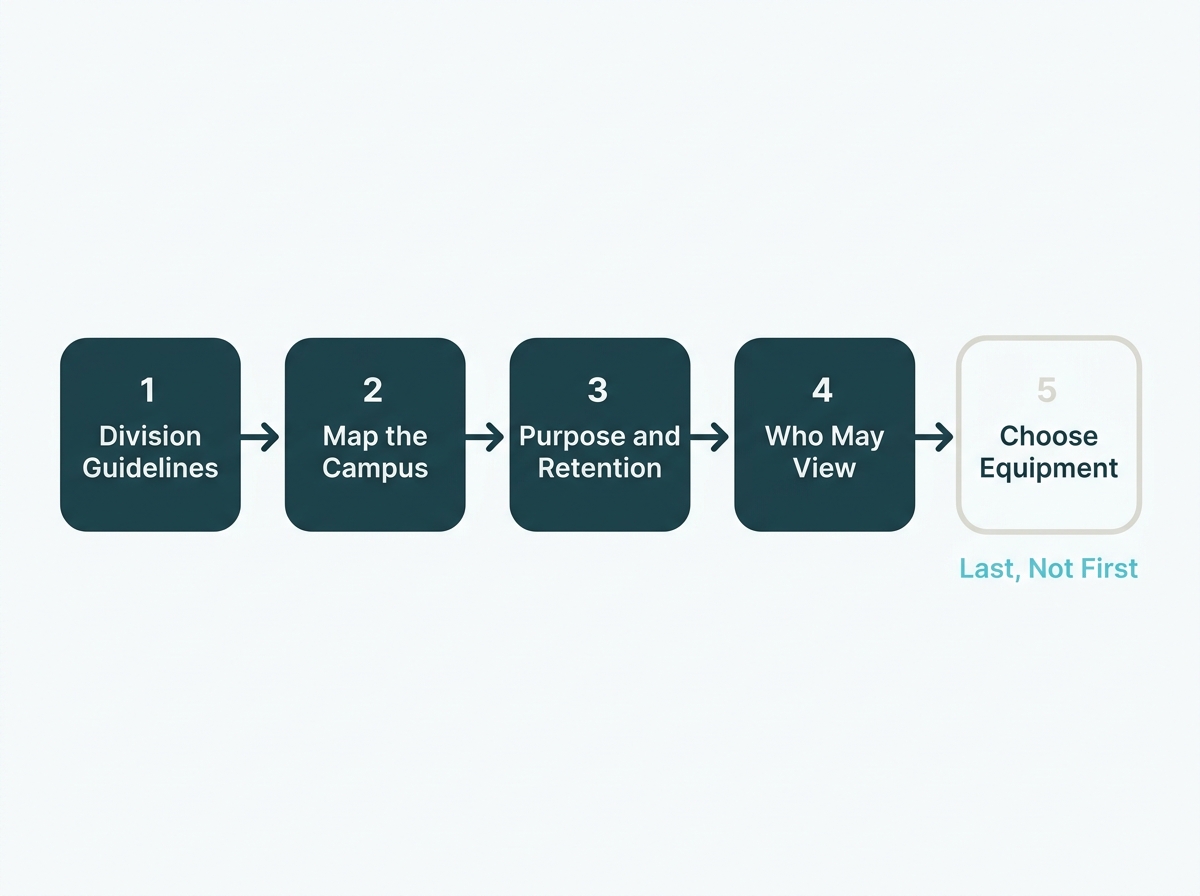
What it means for you: the four decisions before equipment cost nothing and take an afternoon. They also determine whether the system you buy is the right one, which is why they come first.
Frequently Asked Questions
Is CCTV required in Philippine schools?
No single national law requires CCTV in all schools, though some local government ordinances require or fund it within their jurisdiction, and school safety policy has been actively strengthened through 2026, with divisions circulating instructions on security measures. Bills seeking to mandate classroom CCTV have been filed but have not passed, so check with your division office for current requirements rather than relying on a general summary.
Can a school install CCTV inside classrooms?
Only under cumulative conditions. DepEd Memorandum No. 88, s. 2019 states that classrooms are not included in general CCTV allowances unless approved by the Schools Division Superintendent, on the recommendation of the Child Protection Committee, and following parental consultation, with a later memorandum adding Regional Director approval. NPC guidance further requires documented evidence of a serious safety risk at that specific school.
Where should school cameras never be installed?
Restrooms, changing rooms, showers, and any comparable space. NPC Circular 2024-02 names restrooms, toilets, fitting rooms, and lactation rooms as areas carrying a heightened expectation of privacy, and division-level guidelines such as SDO Muntinlupa's repeat the prohibition. This applies to staff facilities as much as to learner facilities.
Do parents need to consent to school CCTV?
Not usually in the strict legal sense for general campus areas, where safety can serve as the lawful basis, but transparency is required, and consultation is good practice. Classroom cameras are different, since parental consultation is an explicit part of the approval path rather than an optional courtesy.
How long can a school keep CCTV footage?
There is no fixed legal period. NPC Circular 2024-02 requires the period to be set by the declared purpose, documented in a written policy, and specifically not determined solely by how much storage the system has. Around 30 days is commonly cited as a working figure, but it should be justified rather than adopted by default.
Who should be allowed to view school CCTV footage?
Only named authorized personnel, with a record kept of viewing, copying, and transfers, as NPC Circular 2024-02 requires. Some division guidelines go further and require the Schools Division Superintendent's approval for any viewing request, which is a sensible model given how sensitive footage involving learners is.
Where should a school start when planning a CCTV system?
With the schools division office rather than with a supplier. Division-level guidelines are more specific than national issuances and are the standard the school will be measured against, and they often set out who decides camera placement and who can approve a viewing request before any equipment question arises.
Final Thoughts
The most useful thing a school can know about CCTV is that there are two different decisions inside it. General campus coverage at gates, walkways, and grounds is broadly accepted and needs the same care any organization owes: a declared purpose, visible notice, restricted access, and a retention period somebody decided rather than the disk deciding for them. A camera inside a classroom is a separate proposition with its own approval path, its own evidentiary requirement, and a professional dimension that deserves an honest conversation with teaching staff.
The prohibited spaces sit outside both of those and are not a judgment call. Restrooms and changing areas, for learners and for staff alike, and the mistake that gets made is rarely deliberate. It is a corridor camera positioned so a doorway sits in frame.
Everything else follows from four decisions that cost nothing: ask the division office, map the campus honestly, write down the purpose and retention period, and name who may view footage and who approves a request.
If you want a campus layout checked before you commit, bring a VIGI specialist three things: a site plan with the positions you are considering, a note of which of them are near restrooms, changing areas, or classroom windows, and the number of days of footage your division expects you to keep. You will get back a coverage plan that stays inside the accepted zones, a storage figure sized to that retention rather than to a bundle, and a flag on any position that would need approval you have not sought.