Solar-Powered Security Cameras Philippines: Complete Guide
Published: October 1, 2026
Quick Answer
-
A solar-powered security camera runs on a solar panel and battery instead of grid power, and sends video over 4G or a wireless bridge instead of a cable.
-
The VIGI SP9030 pairs a 90 W panel, an MPPT charge controller, and a 31.2 Ah lithium battery, and powers up to three devices plus one network link.
-
Size the system for your longest cloudy stretch, not your average day, because every device you add cuts how many rainy days the battery lasts.
A solar-powered camera is a practical way to secure a site with no power line and no network cable. A bangus pond in Pangasinan, a construction lot in Cavite, a resort gate in Palawan: running cable to spots like these can cost more than the cameras. This guide covers how solar CCTV works, what's inside the VIGI Solar Power System, and how to size one for Philippine weather.
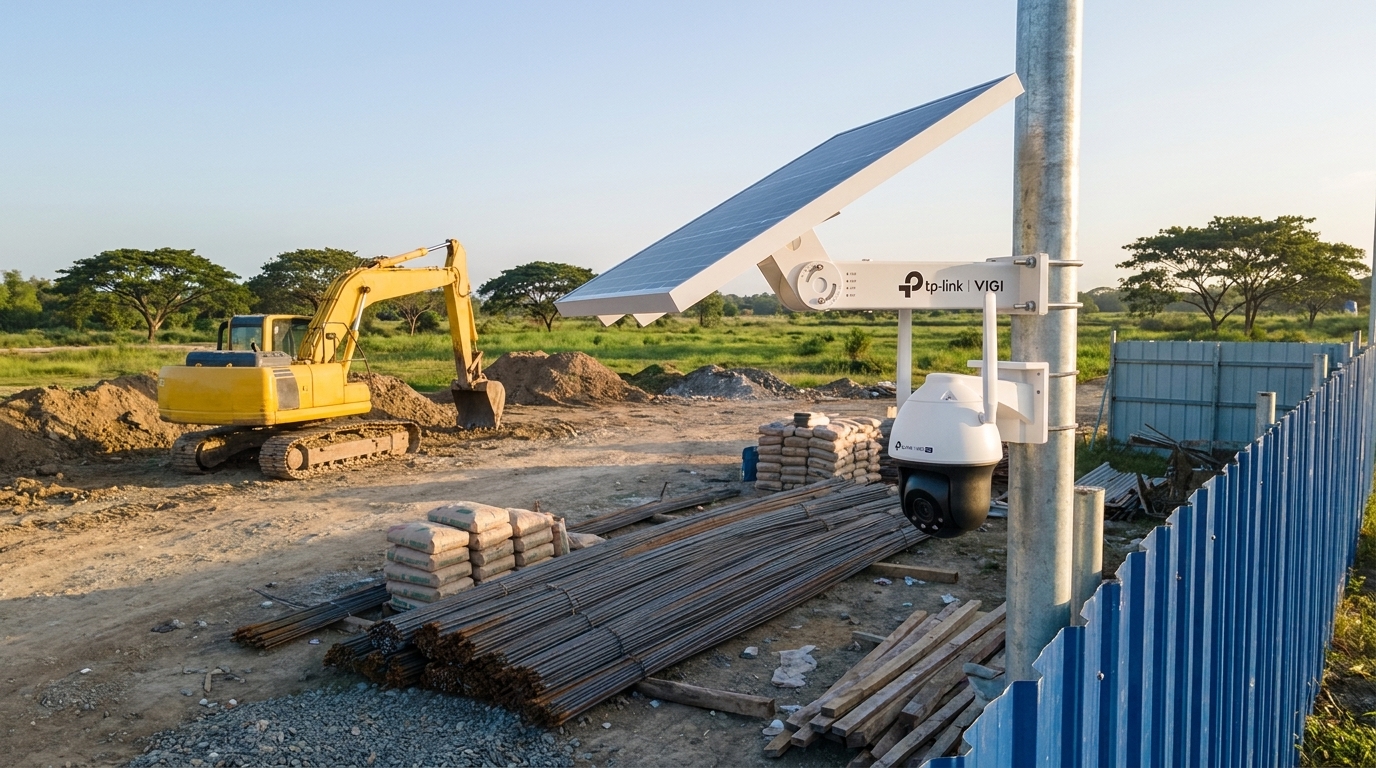
Table of Contents
Why Does Solar CCTV Fit the Philippines?
How Does a Solar Camera System Work?
What's Inside the VIGI Solar Power System?
How Long Does a Solar Camera Run on Rainy Days?
How Do You Position a Solar Panel for Philippine Weather?
How Does a Solar Camera Send Video Out?
How Do You Monitor and Maintain Solar Cameras Remotely?
Why Does Solar CCTV Fit the Philippines?
Because many sites worth protecting sit far from the grid, and the sun is strong enough to power a camera most of the year.
Many sites sit off the grid. The Department of Energy's 2023-2032 National Total Electrification Roadmap found that 1.285 million of the 3.677 million households still needing electricity were in off-grid areas. Farms, fishponds, and job sites in the same areas face the same problem.
The sun is strong. The country's solar potential averages about 4.5 to 5.5 kWh per square meter per day, according to the Department of Energy, in line with Energypedia's solar project overview for the Philippines.
Brownouts stop mattering. A camera running on its own panel and battery keeps recording when the grid goes down, which is exactly when some thieves make their move.
Temporary sites move. Construction projects and seasonal operations can take the whole system to the next site without rewiring anything.
If you're still weighing solar against wired cameras, read the full camera buying framework before going solar.
Not sure a far-off spot needs a camera at all? Take a minute to decide whether a solar camera is the right fit for a remote location.
How Does a Solar Camera System Work?
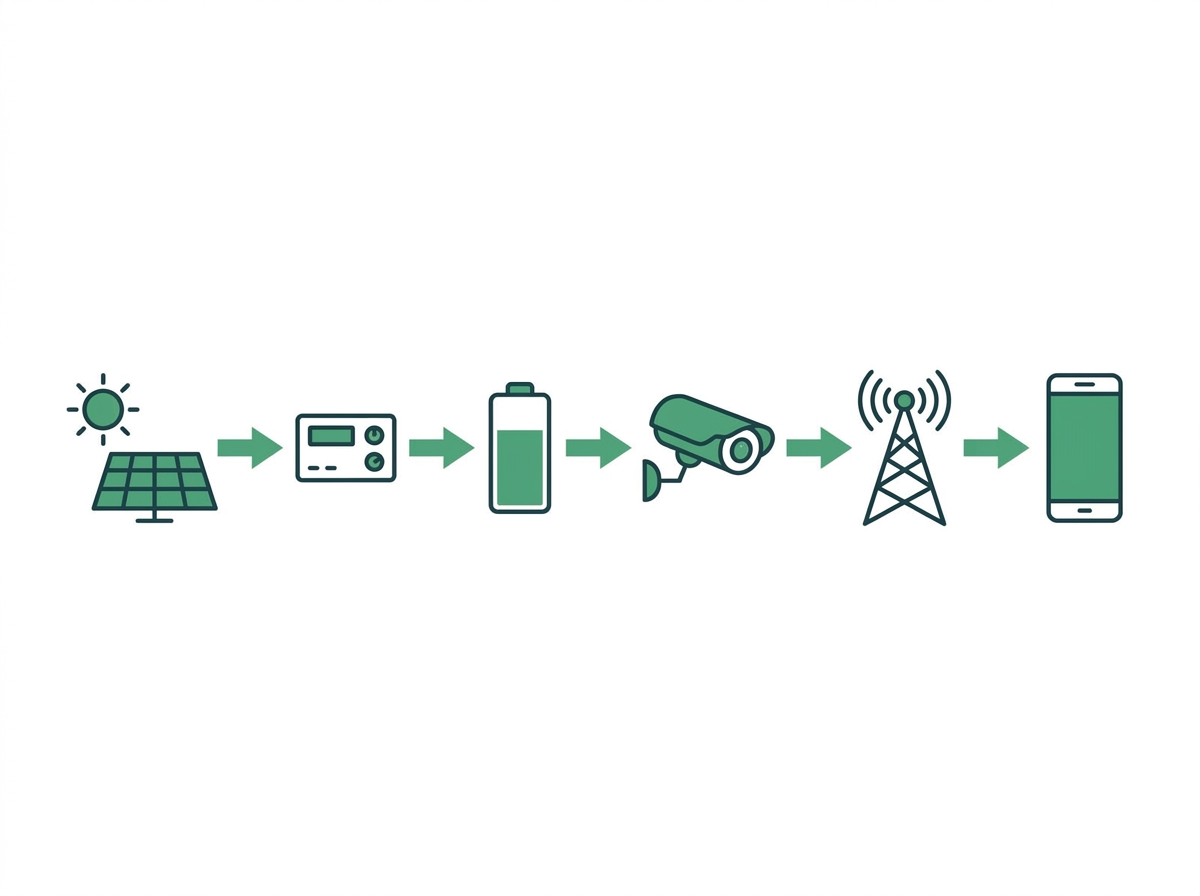
Every solar CCTV setup follows the same chain.
- The solar panel turns sunlight into electricity during the day.
- The charge controller manages power going into the battery. MPPT controllers pull more energy from the panel than older PWM designs.
- The battery stores enough power to run through the night and through cloudy stretches.
- The camera runs on the battery around the clock.
- The network link sends video out, either over a 4G camera with a SIM card or a wireless bridge beaming back to a building with internet.
- The app or VMS lets you watch video, get alerts, and check battery status from anywhere.
The weak link is almost always the battery during long rainy spells. Size for that, and the rest takes care of itself.
What's Inside the VIGI Solar Power System?
A panel, a controller, a battery, and the ports to run your devices, all in one weatherproof kit. The VIGI SP9030 Intelligent Solar Power Supply System is the lineup's core.
|
Component |
VIGI SP9030 Spec |
|
Solar panel |
90 W monocrystalline, 21.6% conversion efficiency, 25+ year lifespan |
|
Battery |
31.2 Ah, 10.8 V lithium, more than 500 cycles |
|
Charge controller |
MPPT, about 20% more charging efficiency than PWM |
|
Outputs |
3 DC power ports plus 1 RJ45 port |
|
Panel angles |
Adjustable from 5° to 55° |
|
Weather rating |
IP66, with auxiliary heating |
|
Management |
Remote power stats, low-battery alerts, firmware updates, and reboot through the app |
Need more capacity? The VIGI SP18090 carries two 90 W panels and three 31.2 Ah lithium batteries for 93.6 Ah in total, suited to heavier loads or longer cloudy stretches. Smaller sites can look at the SP6030 and SP6020. VIGI also announced a larger solar-powered security solution in October 2025, so check vigi.com/ph for the models sold locally.
How Long Does a Solar Camera Run on Rainy Days?
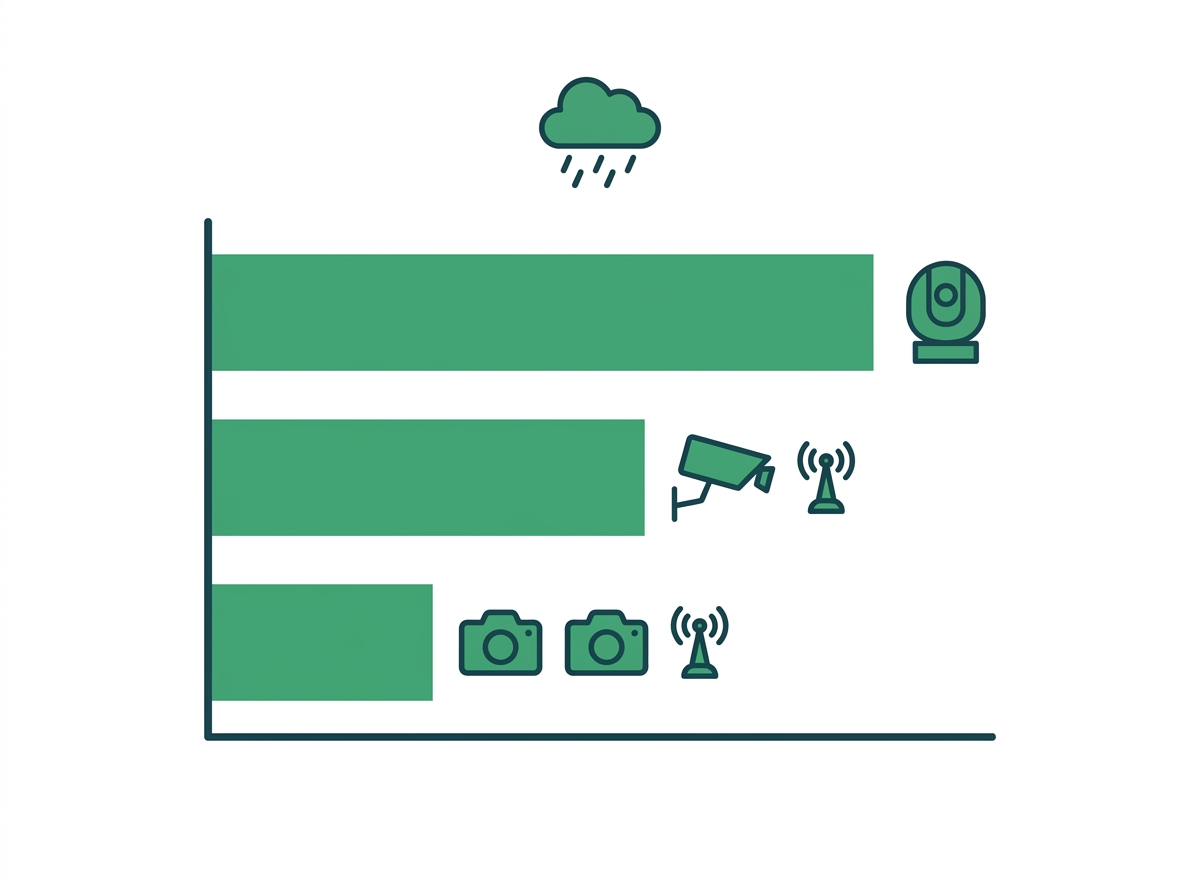
From about two to eight and a half days on a full battery, depending on what you connect. These are the published combinations for the SP9030:
|
Devices on the SP9030 |
Runtime on Consecutive Rainy Days |
Time to Recharge on Sunny Days, Under Load |
|
One VIGI C540-4G pan-tilt 4G camera |
8.5 days |
1.5 days |
|
One VIGI C345 camera plus a wireless bridge kit |
4.2 days |
1.8 days |
|
VIGI C345 and C540S cameras plus a wireless bridge kit |
2.2 days |
2.9 days |
These figures come from TP-Link lab data and public weather data run through a model. Treat them as a planning guide, because real results shift with your region, the season, device power draw, and panel angle.
Count the load. Each device you add roughly halves your rainy-day margin, and a wireless bridge counts as a device.
Plan for rainy streaks, not averages. Most typhoons arrive between July and October, according to PAGASA, and the habagat can bring days of heavy cloud cover on top. Size the system for your worst typical week in that window. If your site sees long gray spells, step up to the SP18090 or cut the load.
How Do You Position a Solar Panel for Philippine Weather?
Tilt it to your latitude, face it south, and keep it out of shade.
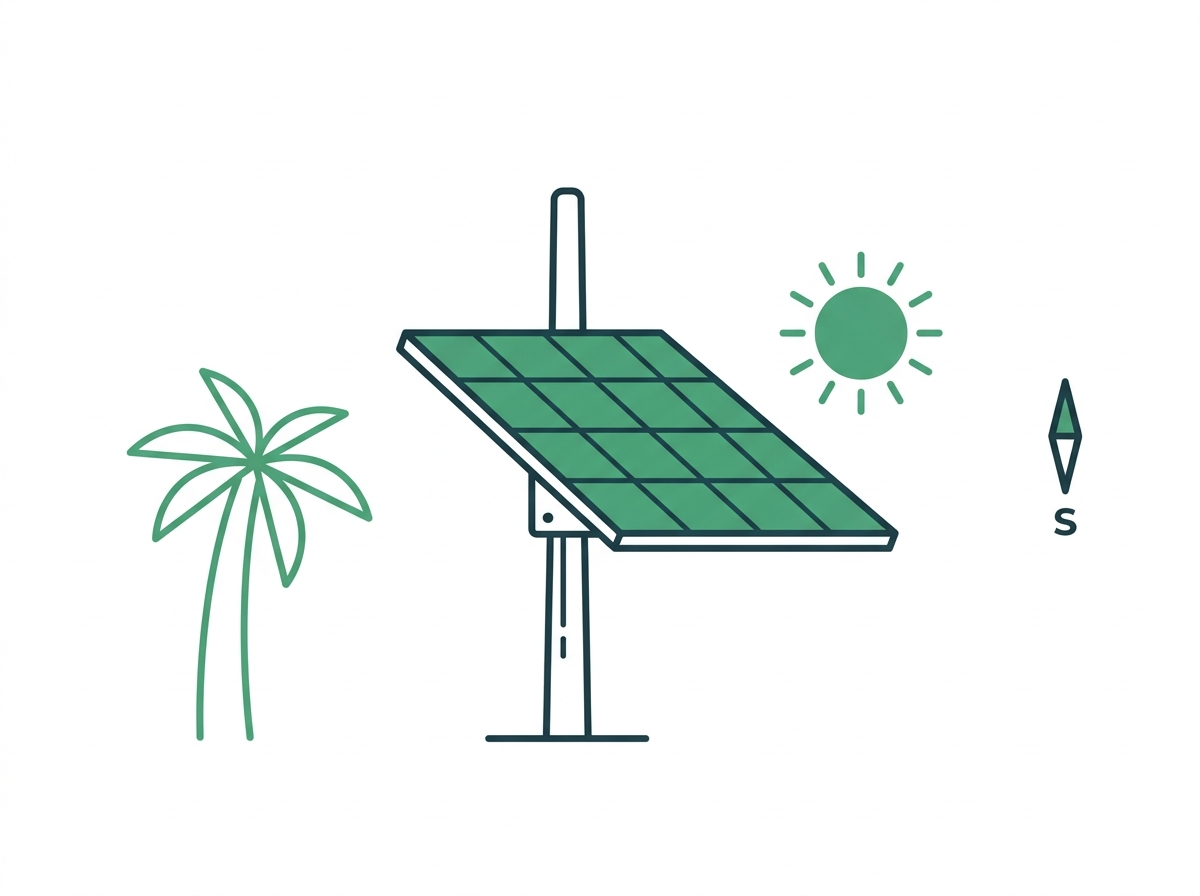
- Match the tilt to your latitude. Most of the Philippines sits between about 5° and 21° north, so a tilt of 5° to 25° covers nearly every site. Around 15° suits much of Luzon and the Visayas, and a little tilt also helps rain wash dust off.
- Face the panel south. In the Northern Hemisphere, a south-facing panel collects the most sun across the year.
- Avoid shade. A single coconut palm shading the panel at midday can cut output sharply. Check shade in the morning, noon, and afternoon before you mount.
- Brace for wind. Use a sturdy pole, anchor it properly, and check every bolt before typhoon season.
How Does a Solar Camera Send Video Out?
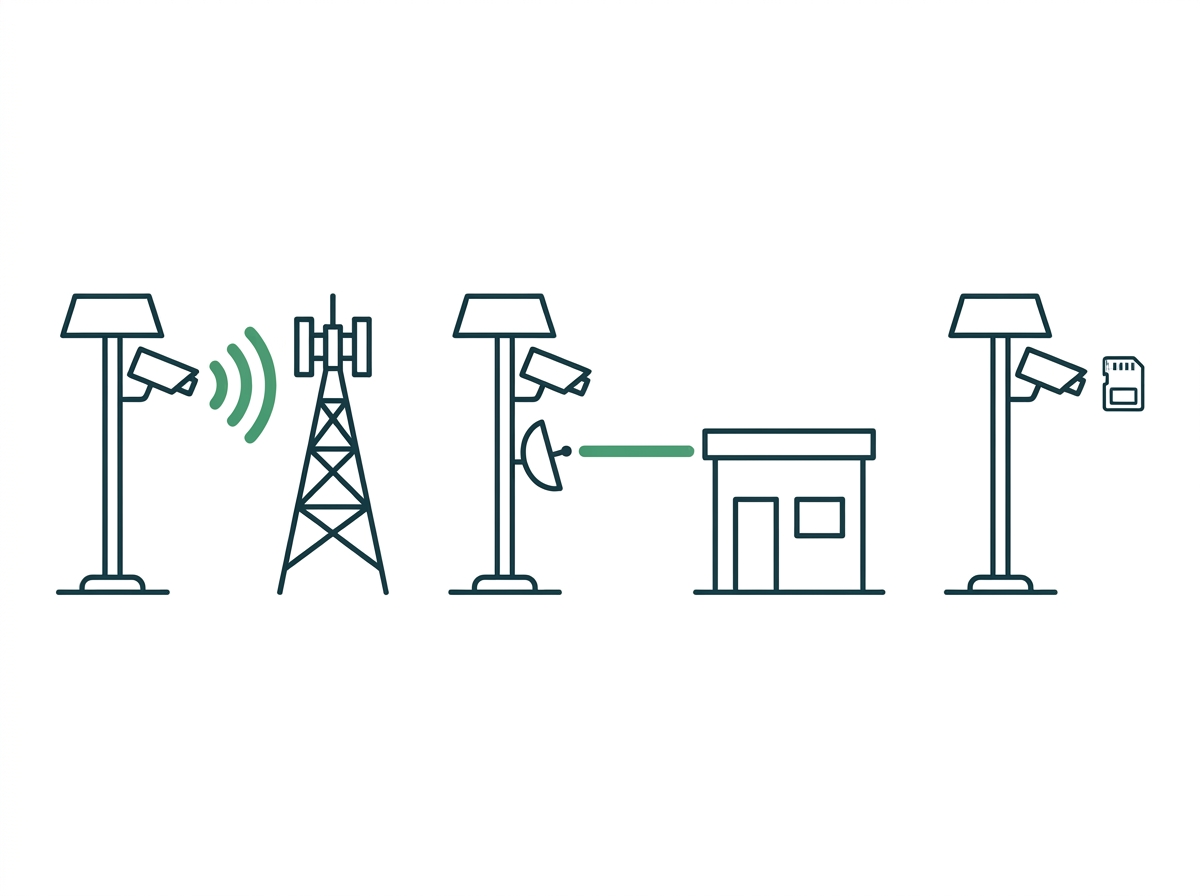
Over 4G, over a wireless bridge, or not at all until someone collects the footage. To see how solar-powered cameras fit within the wider outdoor camera landscape, start with the outdoor camera types, then pick the link below.
|
Option |
How It Works |
Best For |
Watch Out For |
|
4G camera |
Camera has a SIM slot and sends video over the mobile network |
Farms, lots, and remote gates with decent signal |
Needs a data plan and tested signal on-site |
|
Wireless bridge |
Point-to-point radio link to a building with internet |
Sites within line of sight of an office or house |
Needs a clear line of sight and draws more power |
|
Local recording only |
Camera records to its microSD card |
Places with no signal at all |
No live view or alerts until someone retrieves footage |
Before buying a 4G setup, test the signal at the exact mounting spot with a phone on the same network, Globe or Smart. A camera two meters up a pole often gets better signal than a phone at ground level. The VIGI C540-4G, a 4G pan-tilt camera sold in the Philippines, is the pairing the SP9030 runtime figures are built on. Mobile speeds also shape how smooth live view feels, so read how remote viewing depends on your connection speed before you pick a plan.
How Do You Monitor and Maintain Solar Cameras Remotely?
Watch power and video from the app, and visit only when something needs hands. The whole point of a remote camera is not having to go there.
- Power stats. See battery level, charging status, and real-time load.
- Low-battery alerts. Get warned before the camera shuts down, not after.
- Remote maintenance. Update firmware and reboot the system without a site visit.
- Live view, playback, and detection alerts from the camera itself.
Running solar cameras at several locations, like a string of fishponds or multiple construction sites? VIGI Cloud VMS puts them all in one dashboard with no local server or VPN, and you can manage remote solar sites alongside your other locations. For single sites, see other ways to check your cameras when you're away.
A few habits keep solar cameras running for years:
- Mount high. Put panels and cameras out of easy reach, since solar panels can be theft targets themselves.
- Clean the panel. Dust, bird droppings, and ash from field burning cut output. Wipe the panel every month or two, more often in the dry season.
- Check after storms. Wind shifts the panel angle and camera direction. Look at both after every typhoon.
- Read the battery trend. If the app shows the battery draining faster than it used to, check for new shade or a dirty panel before blaming the battery.
- Seal every connection. Use the waterproof cable attachments that come with the system. An IP66 rating holds only when every connection is sealed. For more on ratings, see what separates IP66 from IP67 in wet weather.
Frequently Asked Questions
Will a solar camera keep recording through a typhoon?
Yes, if the mount survives. Heavy cloud cuts charging, but a battery sized for rainy streaks keeps the camera running through the storm and the gray days after it. The real risk is wind, so anchor the pole deep, tighten every bolt before the season starts, and check the panel angle once the storm passes. A panel knocked flat or facing north charges poorly for weeks.
How much mobile data does a 4G solar camera use?
Far more if you stream live all day than if you check in now and then. Recording to the camera's microSD card uses no data. Data goes out when you open live view, play back clips, or receive alerts. Watch your usage on the Globe or Smart app for the first month, then pick a plan with room to spare for incidents when you'll watch longer.
Can a solar camera replace a wired camera at my main store?
No, and it shouldn't have to. Where you already have power and a network cable, a wired PoE camera is cheaper, never runs low on battery, and streams at full quality. Solar earns its place at the edges: a back lot, a remote gate, a fishpond dike, or a construction fence where running cable would cost more than the camera.
What happens if the battery runs completely flat?
The camera stops until the sun brings the battery back. You lose footage for that window, which is why low-battery alerts matter. When one arrives, check for shade, a dirty panel, or an extra device drawing power. If it happens every rainy season, the system is undersized for your load, so cut a device or move up to a larger kit.
Does salt air hurt a solar camera near the sea?
It speeds up corrosion, so coastal sites need a little extra care. Fishponds, resorts, and piers near the sea get salt spray that dries on the panel and eats at metal fixings. Rinse the panel with fresh water when you clean it, use stainless steel bolts on the mount, and inspect brackets and cable seals every few months instead of once a year.
Is solar cheaper than running power to a remote gate?
Past a certain distance, yes. A long cable run means trenching or poles, conduit, labor, and often a separate network line, and those costs climb with every meter. A solar kit costs the same whether the gate is 50 meters or 500 meters away. Get a quote for both, and include what you'd pay to move the system if the site changes.
Does a solar CCTV system need net metering?
No. Net metering covers grid-connected solar systems that send excess power back to the distribution utility. A solar camera kit runs off-grid on its own battery and never connects to the utility, so there's nothing to meter or register with them. The only power question is whether your panel and battery can carry the camera through your cloudiest week.
Final Thoughts
If your most exposed gate sits where no power line reaches, you're either paying for a long cable run or leaving it unwatched. Solar CCTV solves the hardest part of securing remote sites in the Philippines, which is getting power and network there. With strong sun, a battery sized for your load, and a tested 4G or bridge link, a VIGI solar system keeps cameras watching through brownouts and most of the rainy season, and the app lets you check the battery without making the trip.
For every buying decision in one place, read the CCTV System Philippines Buyer's Guide (2026).
Securing a site the grid doesn't reach? Start with the VIGI SP9030 for one or two devices, or the VIGI SP18090 for heavier loads and longer cloudy spells, and pair either with the VIGI C540-4G where there's no cable to run. See every VIGI solar kit by panel size and battery capacity, or have a VIGI reseller check sunlight, signal, and load at your site before you buy.